By Brady Drake | Photos provided by Acelynn Lagerquist
Acelynn Lagerquist did not grow up assuming that agriculture would become part of her identity.
When her family moved to Casselton in seventh grade, she was entering a new school and a community closely connected to farming. A year later, she attended an FFA winter leadership conference. That decision opened a door she had not known was there.
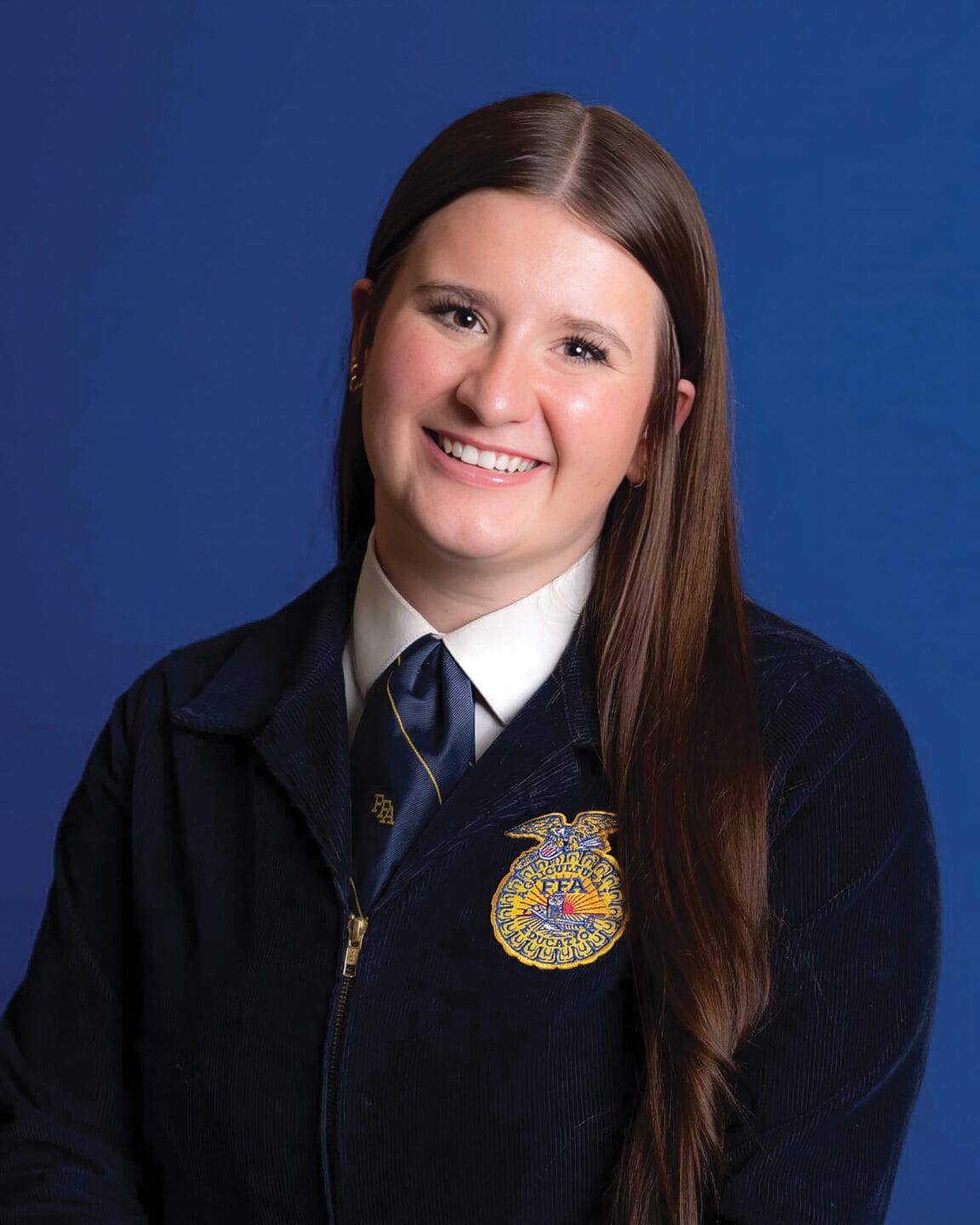
Today, the Central Cass graduate is the 2026–27 North Dakota FFA state secretary. She spends her year traveling the state, meeting students, representing the organization, and helping young people see a place for themselves in agriculture—even when their own path does not begin on a farm.
Lagerquist’s story is a useful reminder that FFA has never been only about production agriculture. At its best, it is also about learning to communicate, testing ideas, accepting responsibility, and discovering what kind of work gives a person purpose.
For Lagerquist, it began with finding her voice.
A Place To Grow
As a younger student, Lagerquist described herself as shy and unsure of what she had to contribute. FFA steadily changed that. Competitions, conferences, and chapter responsibilities asked her to speak in front of people, make decisions, and represent ideas larger than herself.
The growth did not arrive all at once. It accumulated through repetition: another event, another conversation, another moment when she chose to participate rather than remain on the edge of the room. Eventually, the student who once doubted her ability to lead was campaigning for a state office.
That progression reflects the structure of agricultural education itself. The National FFA Organization describes the model as three connected components: classroom and laboratory instruction, a supervised agricultural experience, and student leadership through organizations such as FFA. Students learn concepts, apply them through real work or research, and then develop the ability to communicate what they have learned.
Lagerquist participated across all three. Her experiences included leadership and career development events, hands-on projects, and a supervised agricultural experience that involved communications and social media. The variety mattered because agriculture stopped looking like a single occupation and began to look like a network of careers spanning science, business, technology, education, medicine, and public service.
That broader view also helped her become an advocate for students who may assume they do not belong.
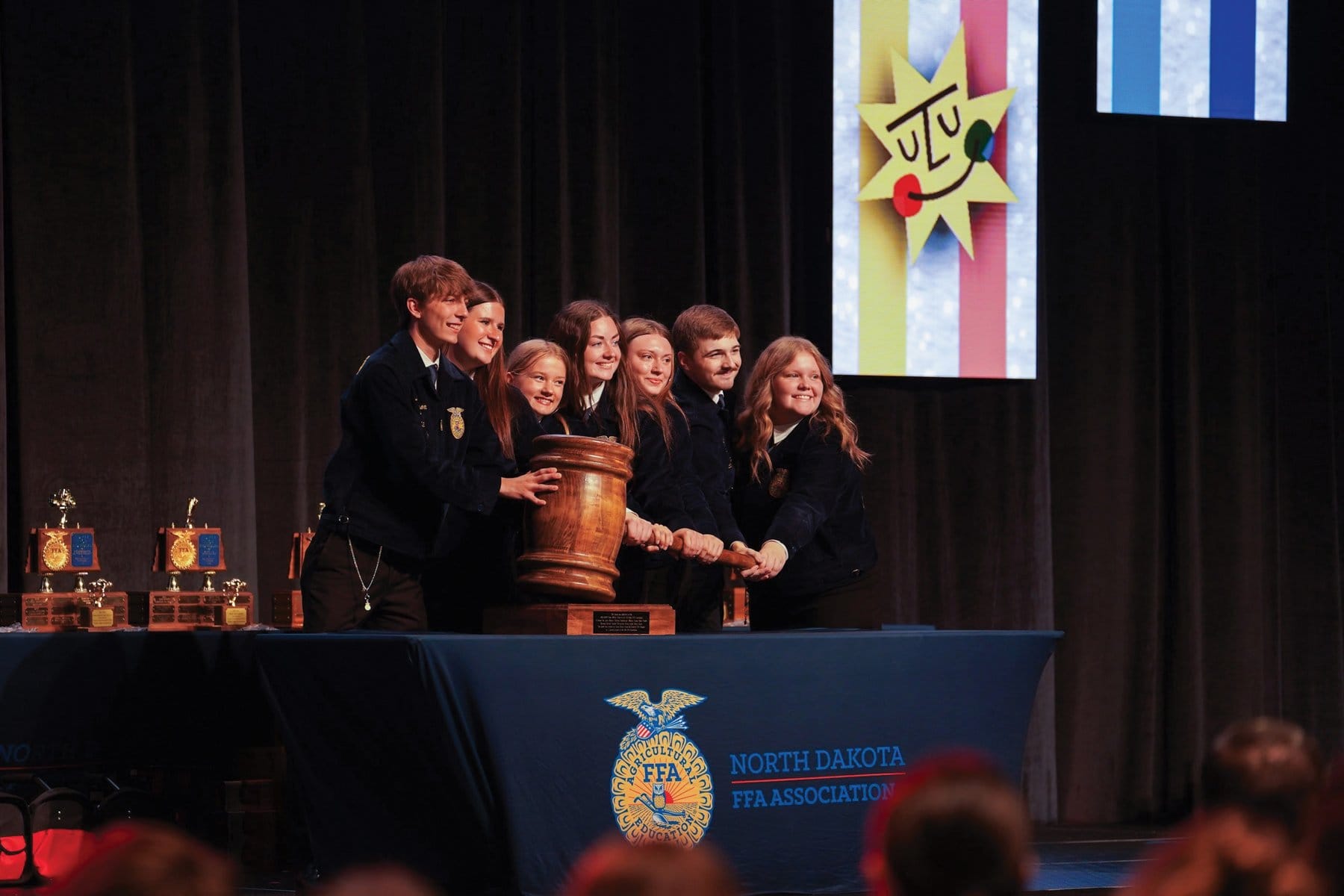
Eventually, the student who once doubted her ability to lead was campaigning for a state office.
Acelynn Lagerquist’s story
Science At The Kitchen Table
Lagerquist’s interests have never fit neatly into one category. She plans to study biology and chemistry at the University of North Dakota on a pre-med track, with the long-term goal of practicing medicine in a rural community. At the same time, she remains drawn to agricultural communications, emerging technology, and service organizations that support farmers and rural families.
Even her hobbies have become laboratories for those interests.
Lagerquist bakes sourdough bread and creates floral arrangements, occasionally selling both. What began as a personal interest in sourdough also became an agriscience research project. According to Lagerquist, the work advanced to the national level and will take her to the National FFA Convention in October.
That progression—from kitchen experiment to formal research—is exactly the kind of connection FFA’s agriscience program is designed to encourage. The National FFA Agriscience Fair recognizes student research applying scientific principles and emerging technology to agriculture, food and natural-resource systems. In Lagerquist’s case, a familiar food became a way to ask questions, test variables, and explain results.
It is also a glimpse of the way she thinks. She is comfortable moving between disciplines: health and agriculture, communication and research, tradition and technology.
Agriculture’s Next Chapter
One subject that especially interests Lagerquist is autonomous agriculture. North Dakota has become a proving ground for new farm technology through projects such as Grand Farm, where growers, researchers and technology companies test tools in real-world conditions.
Lagerquist believes students should be part of that conversation. Young people will inherit both the opportunities and the consequences of rapid technological change. Their questions—about access, affordability, education and the future of rural work—deserve to be heard while systems are still being developed.
Her role as a state officer gives her the chance to carry those questions into rooms far beyond her home chapter.
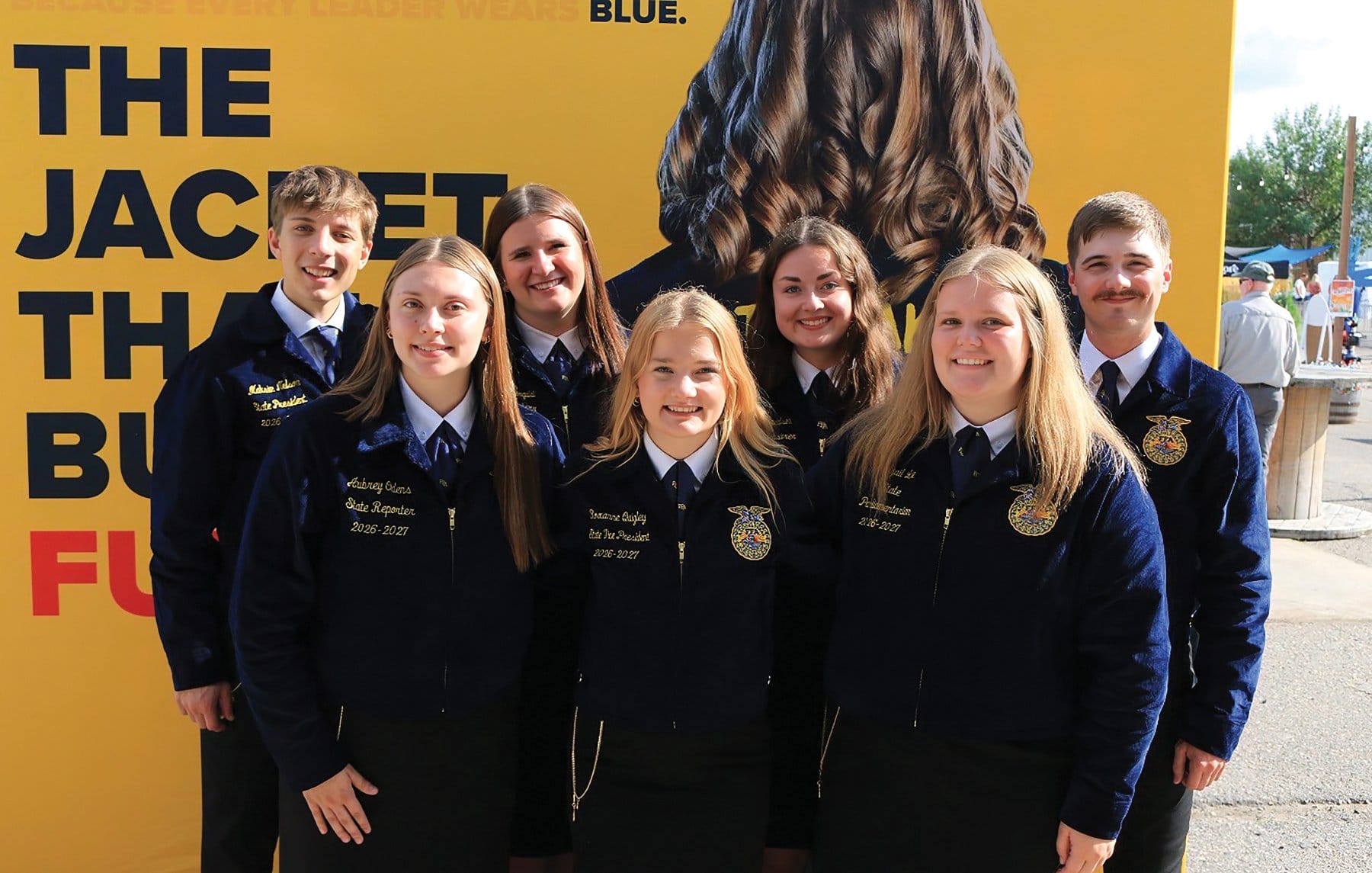
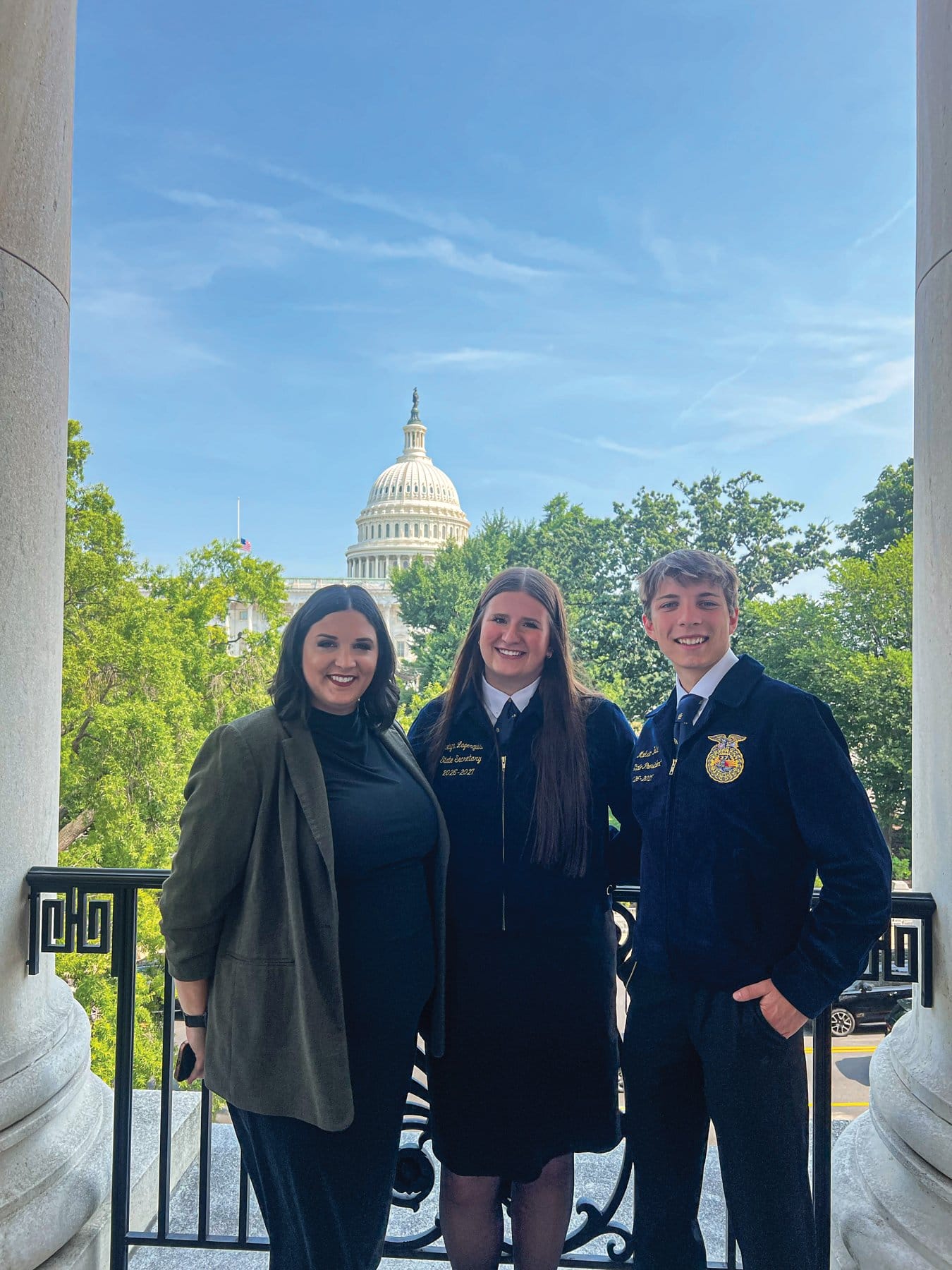
During the summer, she traveled to Washington, D.C., with North Dakota FFA state president Maksim Nelson for agricultural advocacy. She also participated in officer training and statewide travel, experiences that required her to listen to people with different priorities and then represent thousands of members with care.
The blue jacket, in other words, has become both a symbol and a responsibility.
Standing On A Longer History
Lagerquist’s leadership also belongs to a larger story of women in agriculture.
Women did not gain full membership in the National FFA Organization until 1969. Since then, they have become central to the organization’s membership and leadership at every level. Lagerquist said she encounters an FFA culture in which young women can compete, lead, and pursue agricultural careers without their gender defining the opportunity available to them.
Her goal is not necessarily to return to a farm. It is to serve the communities that make agriculture possible.
Rural medicine is one avenue. Philanthropy or nonprofit work supporting agricultural families could be another. Both are rooted in the same realization she reached through FFA: strengthening agriculture means strengthening the people and communities around it.
Leadership With Boundaries
State office comes with a full calendar, public expectations, and a strong temptation to say yes to everything. One of Lagerquist’s most important lessons has been that sustainable leadership requires boundaries.
Rest is not a failure of commitment. Saying no can protect the quality of the work that receives a yes. Mental wellbeing is not separate from service; it is part of the foundation that makes service possible.
FFA helped Lagerquist learn to step forward, but leadership is now teaching her when to pause. Both skills will matter in medicine, agriculture, and any community work she chooses to pursue.
Lagerquist’s future is still taking shape. Biology and chemistry are ahead. So are state visits, a national competition and countless conversations with students deciding whether the blue jacket is meant for them.
More From FFA
- National FFA: FFA is a national, intra-curricular student organization for those interested in agriculture and leadership. North Dakota FFA along with the 49 other states, Puerto Rico and the Virgin Islands make up the over 750,000 members nationwide.
- North Dakota Teach Ag: Thinking about a career as an Agriculture Teacher in North Dakota? Explore the exciting opportunities and pathways to becoming an Ag Teacher! With numerous openings available, now is the perfect time to start your journey.
- ND FFA Foundation: The ND FFA Foundation is a 501(3)c non-profit organization established to support the leadership development opportunities and activities of the ND FFA and agricultural education.
Read this story as it appears in the September/October issue:
More Women In Ag From This Issue
- Women In Ag: From The Field To The Proof
- Women In Ag: Small Machine, Big Hope
- Women In Ag: Rooted In Relationships