By Brady Drake | Photos provided by Sarah Hinkley
The word that keeps Sarah Hinkley going is not autonomy. It is not artificial intelligence, computer vision, or robotics, either. It is hope.
That is the word farmers use when they talk to Hinkley about the Autonomous Nano Tractor, the compact field robot her team at BOPA Precision Agriculture has spent years developing. They see hope that a resistant-weed problem might not require another expensive chemical pass. Hope that a labor shortage does not have to dictate what they plant. Hope that advanced agricultural technology can be built for a small or midsized operation—not only for the farms with the deepest pockets.
“The farmers are saying it’s bringing them hope,” Hinkley said. “That’s why I continue.”
Continuing has required plenty of reasons. Hinkley is the CEO and co-founder of a women-led agricultural technology company attempting to solve two exceptionally difficult engineering problems at once: autonomous navigation in unpredictable fields and the precise identification and removal of weeds. She is raising capital, building hardware, developing artificial intelligence, managing deployments, and doing it from rural Colorado while raising two young children.
There are easier ways she could spend her time.
“I should be doing anything—literally anything—else,” she said. “But this, for me, at this point, is definitely where I feel I can help.”

A Return To Her Roots
Hinkley’s connection to agriculture began long before the first ANT entered a field.
During the school year, she lived with her mother in Dallas. Summers brought a different life with her father’s side of the family in rural Colorado. Her earliest memories include picking blackberries with her grandparents, riding on her grandfather’s tractor, moving cattle, and spending time with great-aunts and uncles on the farm.
She preferred the rural half of that upbringing.
Dallas felt busy and impersonal. Rural communities offered the sense of belonging and peace she struggled to find in the city. Agriculture was not initially her career plan, however. As she grew older, she spent less time on the farm and pursued opportunities elsewhere.
Meanwhile, her family experienced a pattern familiar to agricultural families across the country. The Colorado operation eventually stopped farming, while relatives continued farming in Arkansas, Tennessee, and Missouri. Over time, thin margins forced the family to sell ground and reduce its agricultural footprint.
The turning point came when Hinkley’s grandparents became ill. In 2014, she and her brother, Jaron, returned to La Junta, CO, to be closer to them. Once home, the siblings reconnected with farmers they had known as children. Those conversations exposed how many producers were confronting the same problems her family had faced: rising costs, insufficient labor, mounting debt, and little room for another bad season.
Some were considering leaving agriculture altogether.
Hinkley wanted the next generation—including her own future children—to inherit rural communities where working farms still existed. Instead of simply asking producers not to quit, she and her brother began asking whether technology could give them another reason to stay.
An Unconventional Path To AgTec
Nothing on Hinkley’s résumé made her an obvious candidate to build an autonomous tractor.
She earned a bachelor’s degree in business management from Texas State University and a master’s degree in healthcare administration from Colorado State University. Before agriculture, she worked in restaurants, food service, human resources, and healthcare. BOPA’s company biography describes leadership roles ranging from kitchen manager to human resources director.
At Chick-fil-A, Hinkley learned to think in systems. She recalls working on an early outdoor ordering process in which employees wearing headsets wrote down orders and passed the information from one person to the next—an early version of the type of drive-through workflow now familiar to customers.
She and her brother later launched Fifth Man Window Washing while she was in college. The business made money, but neither sibling felt compelled to turn it into a large company. Healthcare offered another possible path, yet Hinkley found herself frustrated by the bureaucracy surrounding the work.
When she returned to agriculture, she brought something arguably more useful than a conventional technical background: experience examining a complicated system, finding its bottlenecks and redesigning the work around the people using it.
Her brother brought drone experience. Together, they began flying fields and using aerial imagery to help producers identify concerns such as insect pressure and irrigation problems. Their first machine-learning system was developed for hemp production, using images to detect tiny reproductive structures on male plants before they could release pollen.
The crop’s economics eventually collapsed, but the work taught the team how to collect field data, train vision models, and translate something visible from above into an action on the ground. From 2018 through 2021, the company concentrated on understanding producers’ problems.
In 2021, responding to farmers who needed more direct help in the field, the team began developing the robot that became the ANT.
Built Around The Producer
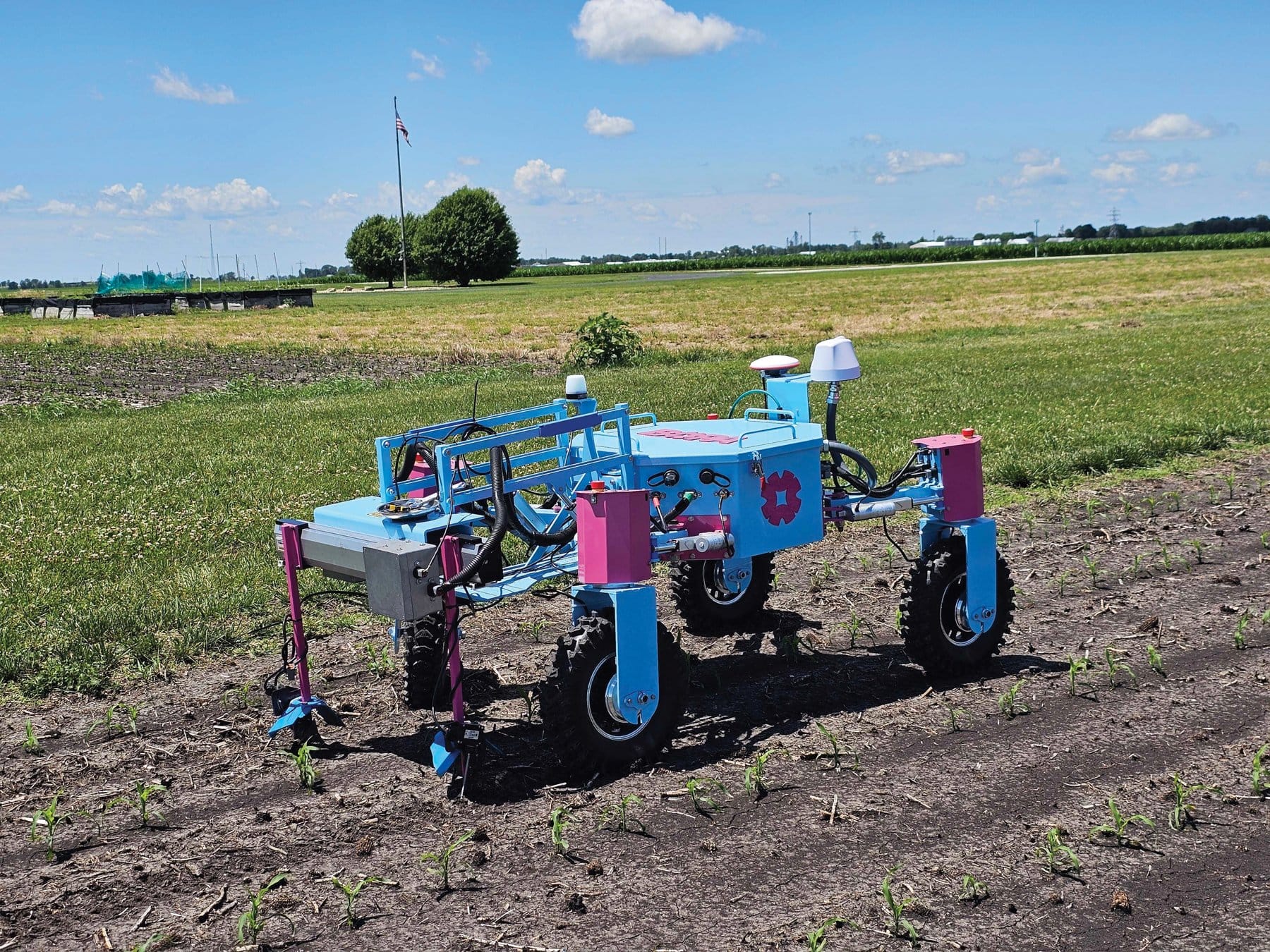
The Autonomous Nano Tractor is intentionally small.
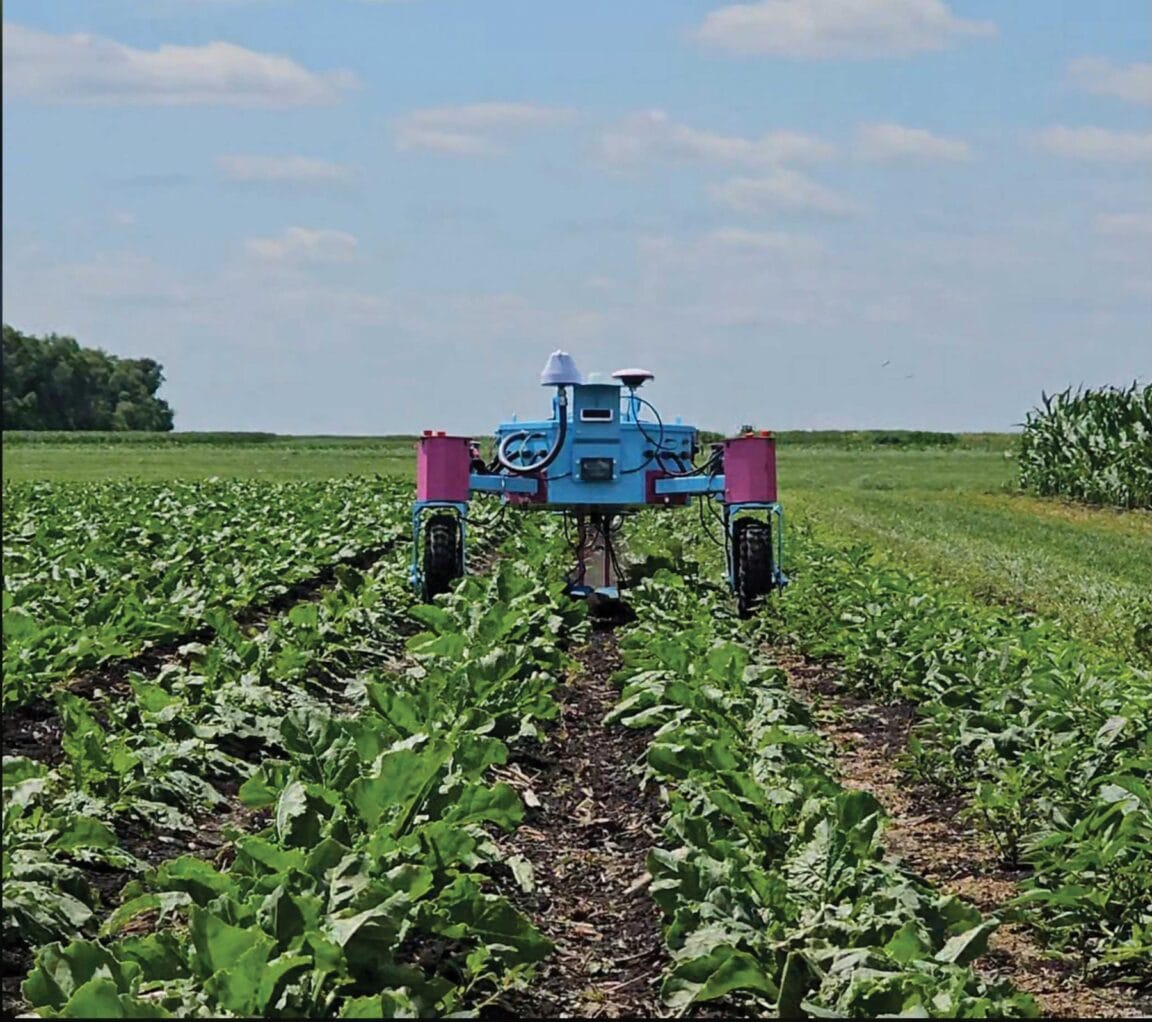
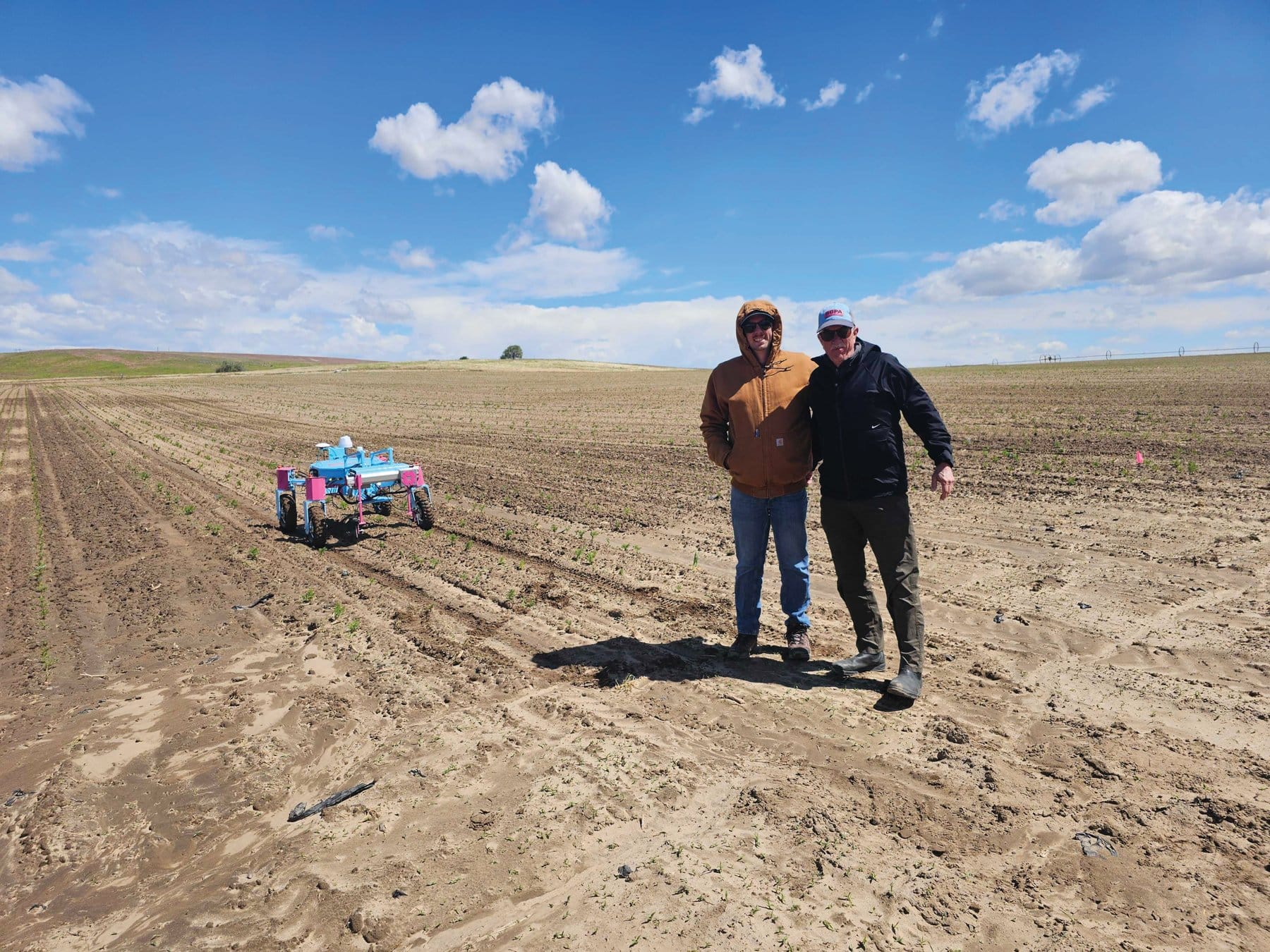
It is designed to work alongside a farm’s larger equipment, operating as another layer of labor and precision rather than attempting to replace every machine already in the shed. A producer can set up the ANT from a phone, assign it work in a field, and monitor it remotely. Its computer-vision system distinguishes crops from weeds, while BOPA’s mechanical Blade system removes weeds—including difficult late-season and herbicide-resistant weeds.
The machine also supports targeted spraying, and its adjustable wheelbase allows it to work across different crops and production systems. BOPA lists beans, sugar beets, potatoes, cabbage, broccoli, chilies, organic corn and soybeans among the crops for which the ANT may be suited. Hinkley said the company has also worked in edible beans, sweet corn and other vegetable production.
The goal is not technology for technology’s sake. It is to return money to the farm.
Hinkley estimates that, in the right operation, the ANT can save approximately $75 to $100 per acre by supplementing labor and reducing inputs. On hundreds of acres, those savings can become tens of thousands of dollars—money that moves directly back into an operation with little margin to spare.
The technology can also give a producer more flexibility. A farm that previously avoided a higher-value crop because it could not find enough people to manage weeds may have another option. A grower dealing with resistant weeds may gain a mechanical tool instead of relying exclusively on another herbicide program.
“IT ALLOWS THEM (GROWERS) TO BE MORE STRATEGIC ABOUT HOW THEY GROW.”
BOPA has also changed how it charges for the machine. The company initially experimented with providing the equipment as a service, but coordinating each farm’s planting schedule, spraying plan, weather, and logistics proved too complicated without a deeply integrated data system. It later sold units, only to encounter a different concern: the company did not yet have enough long-term repair data to confidently determine what a fair purchase price should be.
The current model treats the ANT more like a seasonal labor resource than a piece of equipment a producer must own for a decade. BOPA’s website lists the lease price at $20,000 per unit, with software, remote support, field technicians and repairs included.
“The intention is not for you to keep this thing for 10 years,” Hinkley said. “The intention is for you to use it as a labor crew.”
That structure also lets BOPA upgrade equipment as its hardware and artificial-intelligence models improve. The producer avoids a large capital purchase, while the company remains responsible for supporting the technology and keeping it operating.
For Hinkley, that responsibility matters. BOPA offers an early money-back period because she does not want a farmer stuck staring at a machine that does not perform in that operation.
More Proof, Less Capital
Developing farm robotics is difficult for any founder. Hinkley said being a woman has added another layer to the challenge.
“Being a woman founder is just always something,” she said.
There have been meetings where people directed questions to her male colleagues because they assumed one of them was in charge. She has encountered investors and industry professionals who appeared to require more evidence, more performance and more certainty from her before treating the company as credible.
“They expect 10 times more because women usually deliver more for less,” she said, “and we have fallen into that statistic.”
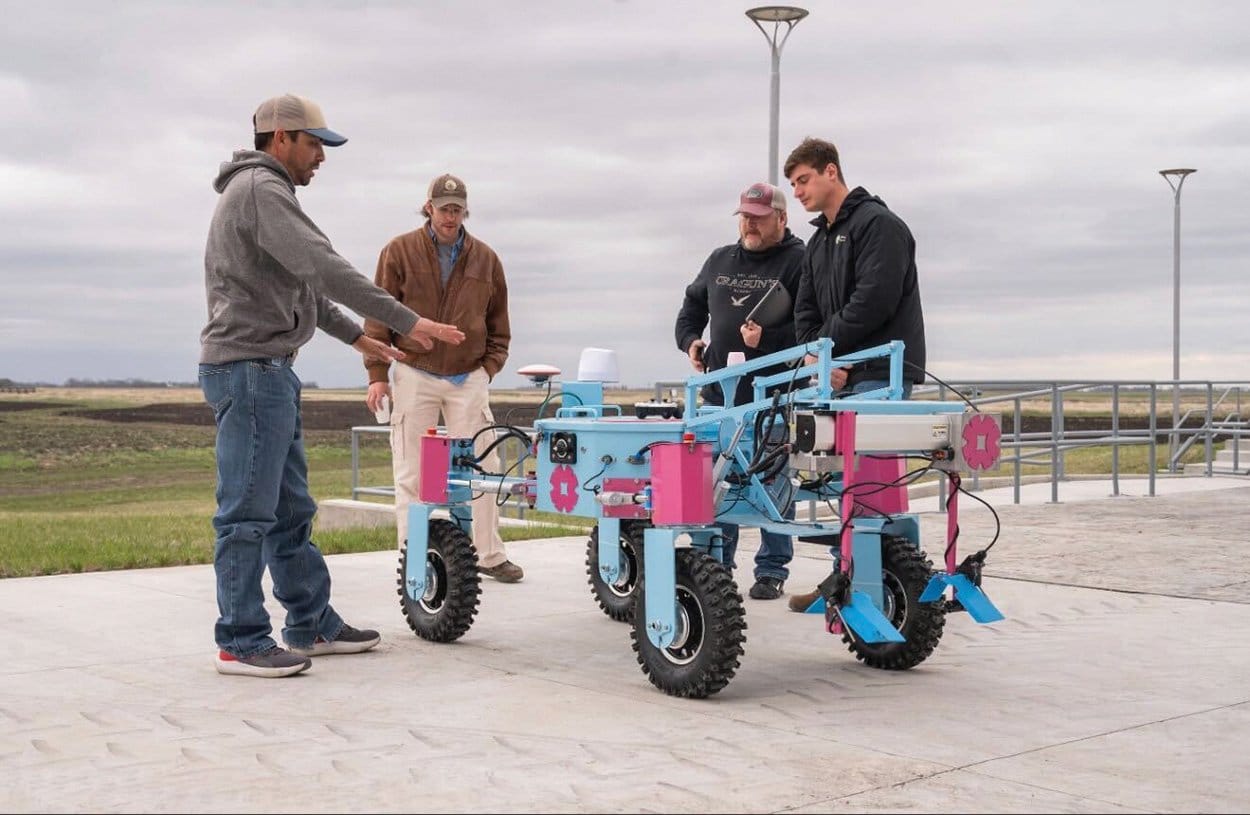
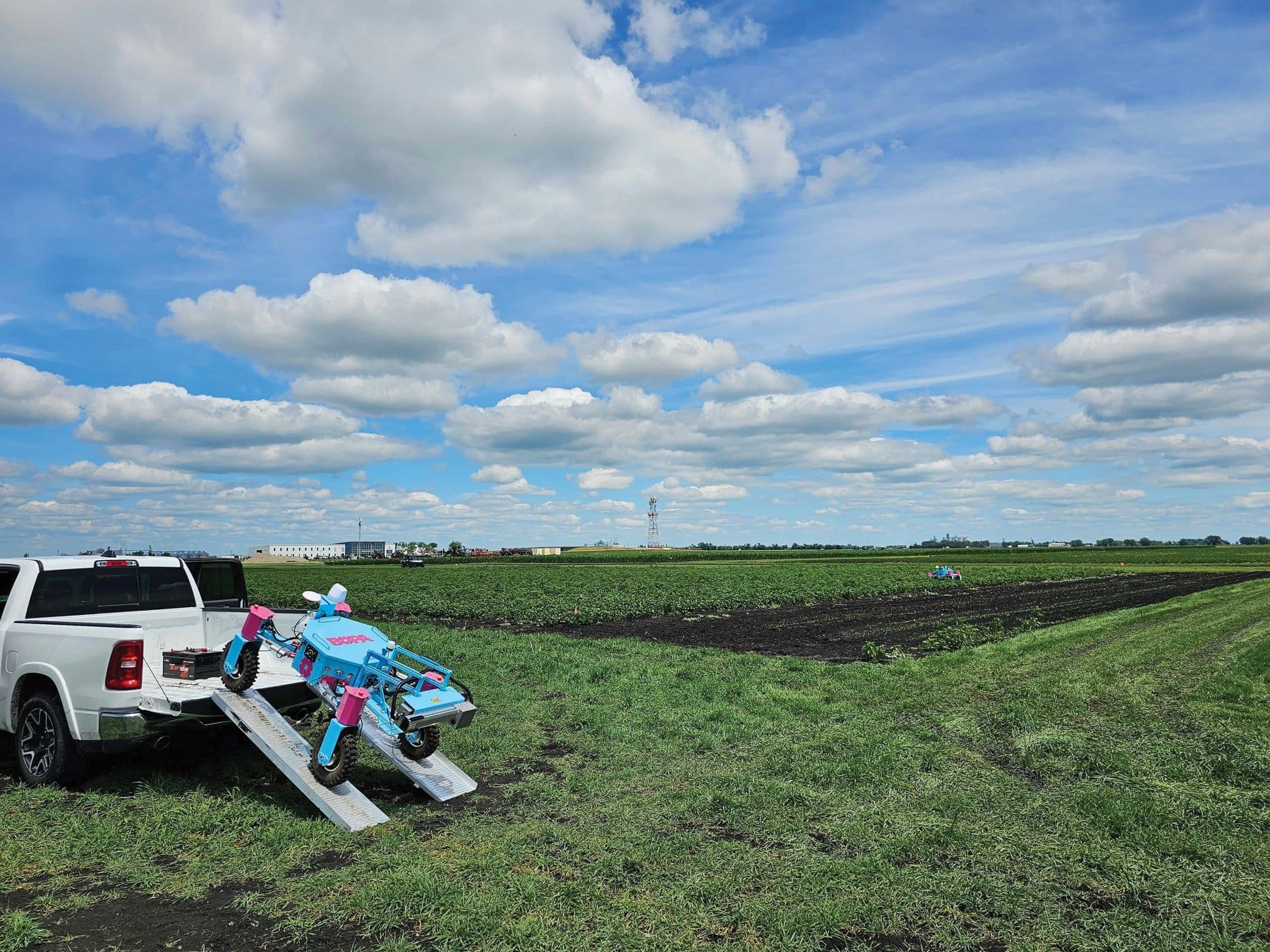
Hinkley said BOPA has raised approximately $6 million over its history while developing several generations of the ANT and deploying roughly 60 units. The company had 22 units operating during the season at the time of her Future Farmer interview, with producers increasingly running the systems themselves.
The company’s progress is beginning to attract wider recognition. Barn Owl Precision Agriculture was the 2024 winner of the American Farm Bureau Federation’s Ag Innovation Challenge, becoming the first woman-led team to win the grand prize. In March 2026, the CORI Innovation Fund reported that BOPA had completed the initial close of a $3 million funding round and added leases from a dozen farm operations managing more than 150,000 acres. The company was also named Emerging Tech Company of the Year at the Colorado Technology Association’s APEX Awards.
Demand is now creating a new problem: building enough machines. Hinkley said BOPA was already seeing interest in approximately 100 units for 2027. Meeting that demand will require more capital, engineers, manufacturing capacity and field support.
Her answer to those challenges is the same quality she identifies as her greatest strength.
“Resilience,” she said. “Being able to persevere through constant challenges—what some people would call failures, but in the startup industry we call learnings.”
“BEING ABLE TO PERSEVERE THROUGH CONSTANT CHALLENGES—WHAT SOME PEOPLE WOULD CALL FAILURES, BUT IN THE STARTUP INDUSTRY WE CALL LEARNINGS.”
Keeping The Work Rural
Hinkley does not want the economic impact of agricultural technology to end with the machine.
Building BOPA in communities such as La Junta is part of the company’s purpose. Rural locations can make recruiting engineers and other specialized employees difficult, but Hinkley believes moving every promising technology company into a major city would miss one of agtech’s greatest opportunities: allowing innovation itself to create new work in agricultural communities.
One example is image labeling. Before a computer-vision model can reliably identify a crop, weed, tractor, or obstacle, people often must review thousands of images and mark what each one contains. That work is frequently outsourced overseas.
The arrangement did not work especially well for BOPA. Labelers who had never seen the crops or farming environments in the images made mistakes, forcing the company’s team to review and correct much of the work.
Hinkley wants to create those opportunities for people who already understand agriculture—FFA and 4-H members, farm parents and others looking for flexible work in rural communities. Their agricultural knowledge could improve the data while introducing young people to careers connecting farming, robotics and artificial intelligence.
“I think exposing these kinds of job opportunities to our rural communities can create that economic incentive for people to live and work in these communities again,” she said.
She sees similar potential in greater cooperation among agricultural technology companies. Farmers do not need another collection of closed systems that refuse to communicate. They need machines, software and data platforms that can work together without requiring them to abandon everything they already use.
That level of integration will require companies to share more and protect their territory less, Hinkley said. Without it, smaller producers may continue waiting for affordable technology until waiting is no longer an option.
Building The Future She Wants To See
Away from the company, Hinkley finds time where she can.
She has a four-year-old and a two-year-old. She enjoys escaping to the mountains and working with wood, occasionally building tables or carving something simply for the satisfaction of making it. After spending her workdays building robots, there is still an appeal in shaping something with her hands.
Her larger ambition is no less tangible. Hinkley believes agriculture can reach a point where producers earn sustainable profits, commercial partners succeed, consumers benefit from healthier and more affordable food, and rural communities regain some of the opportunity they have lost. She knows how idealistic that can sound.
“Do I live in this fake reality sometimes?” she said. “But also, I’m building the machine to go and do it.”
The future she imagines is not waiting in a presentation or business plan.
It is already moving through a field.
BOPA – Precision Agriculture | barnowlag.com | Facebook | Instagram
Read this story as it appears in the September/October issue:
More Women In Ag From This Issue
- Women In Ag: From The Field To The Proof
- Women In Ag: Finding Her Voice In The Blue Jacket
- Women In Ag: Rooted In Relationships