A Q&A with Ostara’s VP of Agronomy, Mike Howell
Every fertilizer decision comes back to what it will do for the crop. With phosphorus, that means considering how much you apply, how it becomes available, and whether it can support the crop throughout the season.
Ostara’s VP of Agronomy, Mike Howell, answers questions about phosphorus availability, soil fertility, and where CG P2X fits into the conversation.
Q: When growers compare phosphorus fertilizers, what should they look at beyond the price?
Price matters in any economic situation, but especially in today’s volatile farm economy. You don’t just need to know what the cost per ton is, but you need to know what a fertility program will cost per acre. You also need to understand how much of the phosphorus you’re buying will be available to the crop and when it will be available. Simply making fertilizer applications does not guarantee that the fertilizer will be available for the crop to utilize this year or even in subsequent years.
Traditional fertilizers such as MAP, DAP, and TSP dissolve readily in water. Once dissolved, that phosphorus can react with calcium in higher-pH soils or iron and aluminum in more acidic soils. Those reactions can tie up phosphorus in forms that roots have a harder time accessing.
That phosphorus hasn’t necessarily disappeared. Some may become available in future seasons. The challenge is getting it to the crop when it’s needed.
That’s why I’d look at nutrient availability alongside cost per acre and field performance. Those factors give you a better basis for comparing fertilizer value.
Q: How does CG P2X approach that challenge?
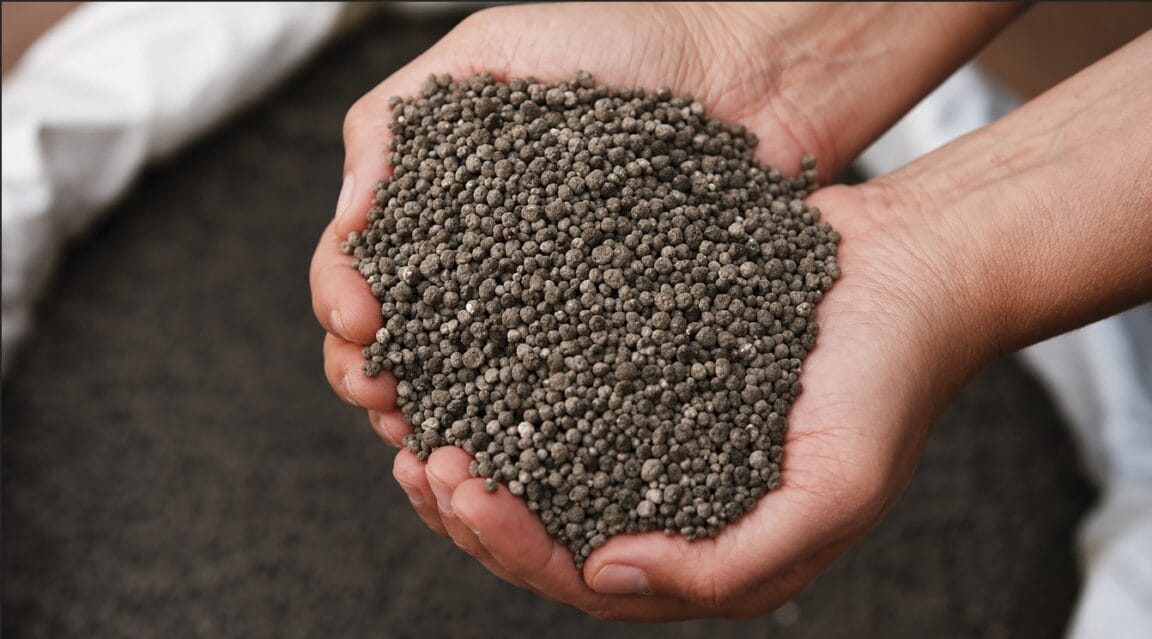
CG P2X is designed to release nutrients in response to crop demand. Roots and soil microbes produce weak organic acids and change the chemistry in their immediate surroundings. Those conditions help dissolve the granule and release its nitrogen, phosphorus, and magnesium.
As root activity increases, the processes supporting that release can increase, too. This helps align nutrient release with crop demand and reduce the opportunity for phosphorus to become tied up before roots can access it.
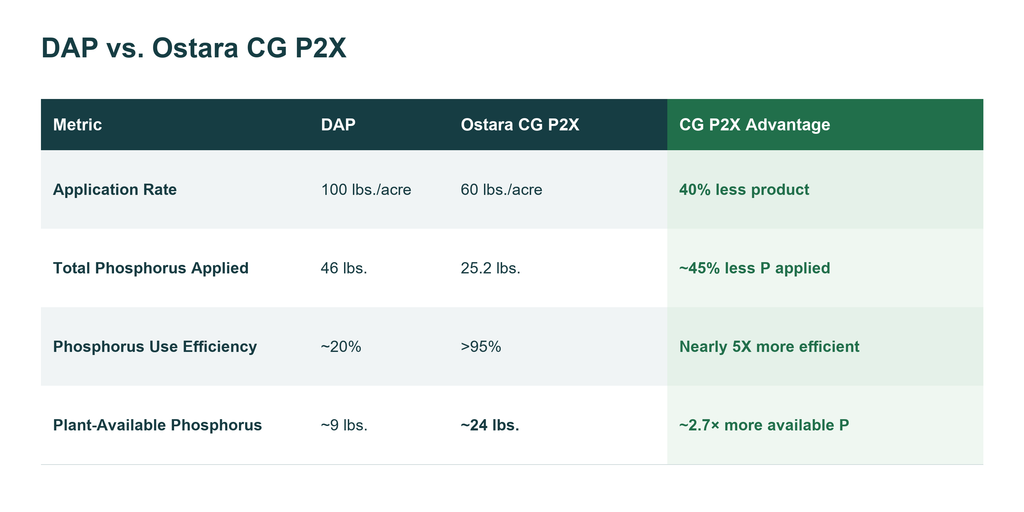
CG P2X provides more than 95% plant-available nutrients.
Q: Growers are familiar with fertilizers like MAP, DAP, and TSP. Why should a grower consider using CG P2X instead of a traditional fertilizer?
The reason to consider CG P2X is the opportunity to supply the crop with more available nutrients at a reduced application rate. By making nutrients available when the crop needs them, they can be taken up by the plant before getting tied up in the soil or leached out of the rooting zone.
CG P2X is non-water-soluble. Its release depends more on the chemistry around the granule. That gives it a different approach to supplying phosphorus than fertilizers that dissolve rapidly in water.
Ostara’s rate guidance is to apply CG P2X at 60% of the current MAP, DAP, or TSP product rate, a 40% reduction in the amount of fertilizer applied. For example, a program using 100 pounds of one of those products per acre would use 60 pounds of CG P2X under that guidance.
That’s a reduction in product applied, so growers should compare the complete programs on a per-acre basis. Your retailer or agronomist can help evaluate the rate against your soil tests and crop needs.
Q: What should growers ask when they look at performance data?
Ask what the product was compared with, what rates were used, and how closely the conditions match your operation. If you’re considering a reduced rate, look for comparisons that actually evaluate that rate. You also want to know what a reported “response” measures.
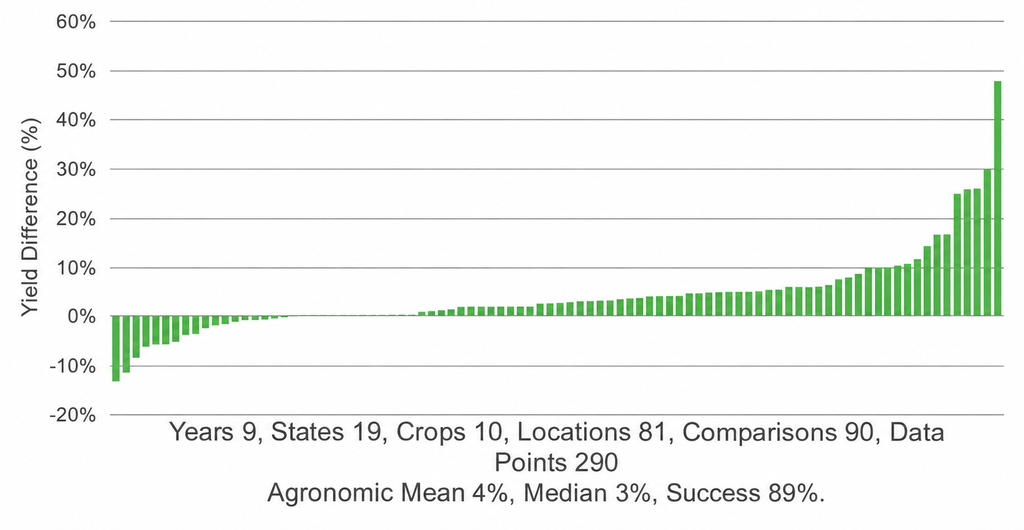
Our current dataset includes 290 observations over nine years, with a positive response in 89% of observations. That means that 89% of the time, CG P2X yields the same as or better than the grower standard practice. We consider that a win because even at equal yields, a producer is still saving time, fuel, and labor due to the reduced application rates.
It gives us a broad foundation for the conversation. From there, I’d focus on results relevant to your crop, soils, and fertility program. A CG P2X program can be incorporated into almost any farming operation, regardless of soil fertility levels, cropping system, soil type, or pH range.
Q: Where would you start a conversation with a grower considering CG P2X?
I’d start with their current fertility program. What are the soil tests showing? How are they supplying phosphorus today? What do they want to improve?
Then we can compare their current program with a CG P2X program, including application rate, cost per acre, and the nutrients each supplies. We can also review relevant field results and discuss how to evaluate performance on their farm.
A grower should understand what’s changing and why there’s a reason to expect it to work. That makes the decision more useful than comparing fertilizer prices alone.