Stream Big, Worry Less: How To Deliver A Flawless Live Event
383 Views
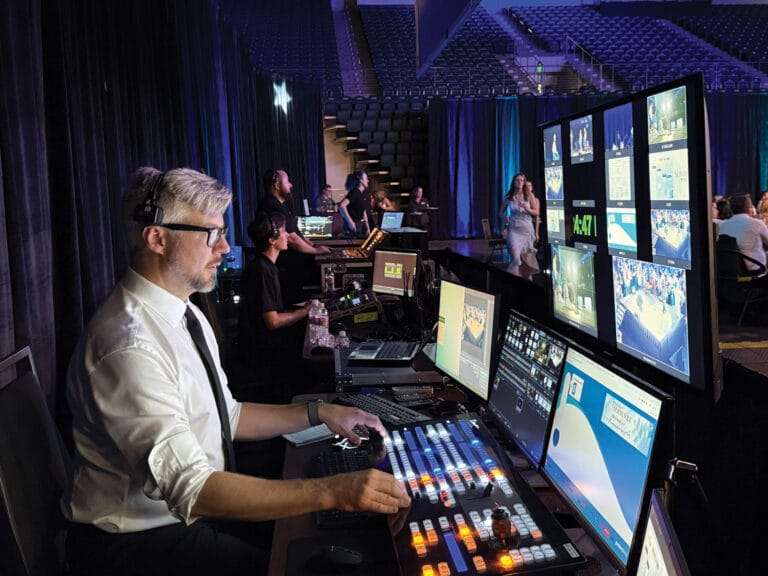
2025 Fargo Air Museum Gala
By Kent Kolstad, President, Livewire
In today’s interconnected world, IN live streaming has evolved from a luxury fallback option to a core component of successful corporate and community events, concerts, conferences, and conventions. Whether you are broadcasting an annual corporate meeting to a global team or streaming a mainstage performance to a virtual audience of diehard fans, seamless execution is paramount.
At Livewire, we have managed thousands of high-stakes streams, even years before the pandemic forced the issue across the events industry. As a result, the Livewire team knows exactly what separates a chaotic broadcast from a professional, engaging production.
If you want to captivate your audience and protect your brand’s reputation, here are the foundational, expert-backed strategies for handling your next livestreamed event.
1. Prioritize Rigorous Redundancy
Nothing destroys a live stream faster than a dropped internet connection or hardware failure. A professional streaming setup should never rely on a single point of failure. If streaming for your event is mission-critical, your event should include a primary and a secondary internet source-ideally from entirely separate service providers-configured to failover automatically. The same philosophy applies to encoding hardware and power sources. If one system hiccups, a backup must take over instantly so your online audience never sees a spinning loading icon.
2. Remember That Audio Is Everything
An often-overlooked truth of live streaming is that audio is actually more critical than video or lighting. Audiences will tolerate atemporary dip in video resolution, but they will instantly tune out if the audio is echoey, muffled, or out of sync. Achieving pristine sound requires dedicated microphones for every speaker, audio system integration to manage and mix audio levels in real-time, and sometimes even a separate audio mix and engineer tailored specifically for the online broadcast, which demands different equalization than the in-room PA system.
3. Design For Active Engagement
A successful live stream shouldn’t feel like a passive television broadcast; it should feel interactive. Incorporate real-time Q&A sessions, live polling, and moderated chat features to bridge the gap between the physical venue and the remote viewer. If you are hosting a hybrid event, instruct your presenters to look directly into the camera frequently. Acknowledging your online audience ensures they remain active participants rather than distant spectators.
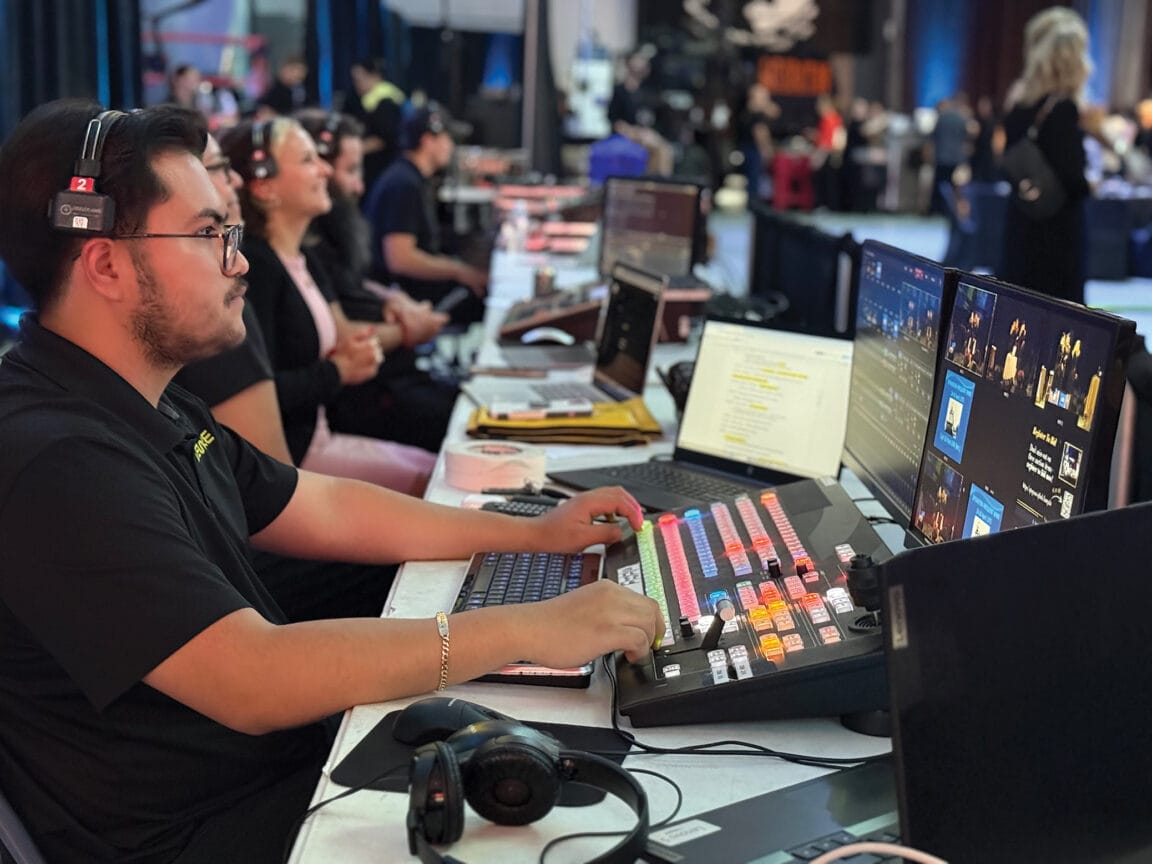
While smartphones make broadcasting look simple, executing a corporate-grade, multi-camera stream with integrated presentation slides, lower-third graphics, and crisp audio requires sophisticated technical infrastructure and, more importantly, a skilled team to bring it all together. Entrusting your broadcast to an internal team member or volunteer with typical consumer-level gear could likely result in technical glitches that will distract from your core message.
Partnering with a dedicated live event production company that specializes in streaming allows you to focus entirely on your content and your guests, while the event experts handle the heavy lifting.
At Livewire, we bring broadcast-quality equipment, rock-solid redundancy, and decades of specialized in-room and broadcast event experience to meetings and events just like yours, down the street, and across the country.
Don’t leave your next big event to chance. Let us help you elevate your live event in-person and online. Reach out at livewirenow.com.