Precision Ranching is Here: 701x Founder Kevin Biffert is Making Sure it Stays
432 Views
Kevin Biffert 701x Founder
At 2:17 a.m., a rancher’s phone vibrates. A bull, worth more than a nice used pickup truck, has crossed a fence line miles from the nearest road. In another pasture, a cow’s movement has slowed just enough to trigger a health alert before visible symptoms appear. These are the moments ranchers rarely see in time.
On a screen in downtown Fargo, those moments show up as dots moving across a map of western North Dakota. Each dot is an animal. Together, they form a realtime picture of where cattle are, how they’re moving, and what their behavior might be signaling about breeding, health, or risk
The company behind it all is 701x, a company with a straightforward mission statement to help ranchers “do more with less,” but the path to getting there is anything but typical. 701x’s founder and CEO, Kevin Biffert, didn’t come up through software startups or agtech accelerators. He came up through industrial automation. Precision ranching, as Biffert frames it, is about using real-time data, including location, movement, behavior, and records, to reduce guesswork and physical check-ins, especially across large, remote operations.
Biffert described to us that earlier chapter in numbers that still sound unreal: high-speed lines reaching “1,200 a minute” producing sophisticated packaging equipment for syringes and medical devices. He founded his first company, Fargo Automation, in 1996, and sold it in 2017. After the acquisition, the company became part of Körber (via Körber Medipak).
That two-decade run in automation did more than teach Biffert how to build machines. It helped him build a philosophy that productivity is what unlocks a better life.
He says he learned that early at 3M, where he watched a company maintain roughly the same headcount while growing revenue. That wasproof, to him, that “you’re always going to have to do more with less.” Whether it’s factory lines or ranch work, efficiency that improves someone else’s day
701x is his attempt to transplant that worldview onto the cattle industry with precision ranching, which is the idea that you can manage cattle and infrastructure with real-time data—location, behavior, health signals, and records—so fewer decisions depend on physical check-ins.
If you irritate the animal, they’ll find a way to get it off.” – Kevin Biffert
Hardware + Software
Biffert’s origin story for 701x starts with observation. He told us at Future Farmer that he’s long tracked markets and public companies, and he kept seeing the pattern that businesses that tightly combine hardware and software can build durable ecosystems. He points to Apple, Google, and Microsoft as examples of companies that made the experience seamless by controlling both the device and the interface.
Those observations became the blueprint for 701x. Where it gets interesting is what he chose as the “wearable.
At a basic level, 701x’s system works by turning cattle into moving data points without requiring fixed antennas, base stations, or constant connectivity. GPS-enabled ear tags collect movement and activity data throughout the day. When connectivity is available, via cellular or satellite, the data syncs to the platform. When it’s not, the system stores information and uploads later.
The result is periodic insight that includes alerts when something changes, trends over time, and records that can be reviewed without being physically present in the pasture.
701x builds GPS-enabled smart ear tags and a connected software platform meant to help ranchers keep better records, locate animals, and catch problems earlier, especially the kind of problems cattle can’t verbalize. As North Dakota’s Department of Commerce describes it, 701x’s tags gather data “similar to a smart watch” and can generate alerts from deviations in movement and other signals.
If you ask most people what makes GPS livestock tracking difficult, they’ll talk about coverage in remote areas. That is a real problem, but the biggest hurdle 701x worked to overcome was irritation. According to Biffert, one of the biggest early lessons was how to put a device on cattle so it survives—without the animal deciding it doesn’t belong there. “If you irritate the animal,” he said, “they’ll find a way to get it off.”
Of course, durability is only part of the challenge. The devices also have to coexist with animals that have no interest in wearing technology. Biffert said one of the company’s earliest lessons was simply that if you irritate the animal, it will find a way to remove the device.
Inside 701x’s downtown facility, that lesson shows up everywhere. When we toured the space, 3D printers were running continuously—one producing a life-size cow head for a trade show display, others prototyping housings and components. The team laser-engraves its own devices. Engineers have built custom machines to simulate the wear, impact, and stress the tags face in real-world conditions.
The goal of this self-sufficient team is to create hardware that stays on the animal, survives the environment, and earns trust by not becoming another thing ranchers have to fix.
Building 701x
701x has a robust in how production line.
Biffert started building 701x the day COVID was announced. As supply chains and electronics companies slowed, Fargo’s talent market changed overnight, allowing him to hire engineers and software developers who were suddenly available due to layoffs at other local firms.
Biffert doesn’t describe 701x as a tag company. He describes it as an ecosystem company
When talking to him, he consistently uses Apple as the analogy: not just one device, but a family of devices that work together. At 701x, that means a stack of products that connect to a single workflow: knowing where cattle are, what they’re doing, and whether something is going wrong—without a ranch family having to be physically present every hour.
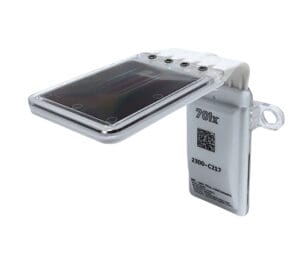
xTpro: GPS smart ear tag (cellular + satellite)
The xTpro is positioned as a satellite-connected GPS ear tag with features that 701x markets around three core jobs: location, health/activity insights, and breeding insights like bull mounting data. The company explicitly highlights the “no antennas or base stations required” concept on its own product page.
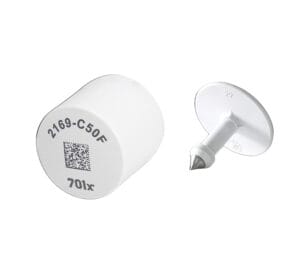
xTlite: a smaller tag aimed at calves / herdwide coverage
701x describes xTlite as “small enough for a calf” and built for cost-effective, broader deployment, including “relative GPS tracking.”
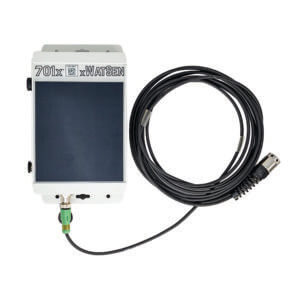
xWatSen: remote water monitoring
The Product Line
Cattle management isn’t only about animals; it’s about infrastructure. 701x’s xWatSen is described as a remote system that tracks water tank levels and temperature in real time, aiming to reduce labor and prevent shortages.
The production room.
Tight Cattle Numbers, High Stakes, and a Labor Reality
Biffert’s “do more with less” framing is a good slogan. It also maps to the economic reality of cattle production in the United States.
USDA’s National Agricultural Statistics Service reported 86.7 million head of cattle and calves in the U.S. as of January 1, 2025, down about 1% from the year prior.
Later, USDA reported 94.2 million head as of July 1, 2025 (mid-year totals can be seasonally higher as the calf crop comes in), and estimated the 2025 calf crop at 33.1 million head.
Against that backdrop, two pressures stand out
Fewer people are stepping into ranch work (or at least, fewer are willing to live the “90 hours a week”).
Each animal matters more when replacement costs rise, and herds are tight.
“If ranch life doesn’t offer flexibility. If parents can’t take kids to a game or go on vacation, then the next generation will opt out.”
“Cattle Can’t Talk”
The most striking part of Biffert’s interview is how he described health monitoring. He said 701x is essentially translating animal behavior—movement, eating, ruminating—into a form a rancher can interpret quickly.
Those are ambitious statements, and accuracy metrics can vary by herd, environment, and study design. But the general magnitude of death loss—and its cost— has been documented. A USDA APHIS/NAHMS summary of the 2015 cattle death loss study estimates the value of 2015 death losses at $3.9 billion, with 6.2% of the calf crop lost and 2.2% of cattle inventory(500 lb. or more) lost.
That’s the basic ROI logic behind 701x. If you can reduce loss and improve reproduction efficiency even modestly, the economics can work, especially as cattle values rise.
The Test Ranch
Biffert said 701x bought a ranch in western North Dakota early in the company’s life to test on live animals under real conditions and generate the data needed to build analytics and AI models.
From there, he said they moved into university trials and studies with NDSU, the University of Missouri, universities in Colorado, TCU, and West Texas A&M and mentions the USDA.
If ranch life doesn’t offer flexibility. If parents can’t take kids to a game or go on vacation, then the next generation will opt out.” – Kevin Biffert
Why Acquire DigitalBeef?
The 701x story took a major turn in late 2024 with the acquisition of DigitalBeef, a registry platform used by breed associations. 701x had reached a point where hardware adoption alone was no longer the limiting factor. The challenge was what happened to the data after it was collected—how it moved into the systems ranchers already used for genetics, registration, and performance tracking
In its announcement, 701x described DigitalBeef as a B2B SaaS company whose software enables association members to submit performance data and obtain registration certificates and performance rankings. 701x positions itself as the operational layer where ranchers record data in real time in 701x, and then send it to DigitalBeef for registration workflows.
In our interview, Biffert explained the strategic “why” in market terms
Start at the “top” of the cattle world—seedstock and registered cattle producers who set genetics and performance expectations
Build tools they already need (registry + data capture).
Then filter down into commercial cattle as practices spread.
Their adoption strategy is to win credibility and workflow integration where record-keeping is already rigorous, and then broaden to the much larger base of commercial operations.
Biffert stressed that 701x is not done building. In the interview, he described the cow-calf market as only part of the lifecycle, and he pointed to the feedlot phase as the next big opportunity.
He said 701x has filed a patent for a system aimed at tracing animals in feedlots, and that the lack of changes to the patent signaled to him that the market was “wide open.” He also noted the core constraint that feedlots are price sensitive. If technology costs too much, operators may simply absorb losses rather than deploy it at scale. His proposed answer is a different deployment model:
701x would create a SaaS system where customers pay pennies per day per animal—more like renting than buying.
Going public (his stated timeline is around 2030) would be part of the capital strategy to deploy hardware broadly into feedlot environments.
The Hardest Problem is Capital
Ask Biffert about challenges, and he doesn’t start with technology. He starts with funding.
He said the company has the engineers, the talent, and the right people. The bottleneck is “convinc[ing] an investor,” and he emphasizes that most of their investors are local—by choice. In speaking with us, he noted that traditional venture capital hasn’t been a fit, partly because he has kept roughly 60% ownership, which he says is important to maintain control and avoid the “stifling” outcomes he’s seen when competitors get bought by large corporations.
He also mentions two other principles that shape the company:
Employees as stakeholders, through stock options and incentives
Hiring for energy and fit over perfect credentials: “We don’t look just at grades…you come here and prove to us…you’re going to be energetic to do it.”
Those are leadership choices, and they’re also part of the Fargo story. A downtown HQ, local hiring, local investors, and a control-minded founder is a very different profile than the hyper-funded coastal startup stereotype.
This machine, built in-house by the 701x team, simulates cattle steps.
This machine, built in-house by the 701x team, simulates cattle wear and tear.
The “Autosteer” Moment for Ranching
Late in the interview, Biffert offers the clearest articulation of what he believes 701x could become, which is the equivalent of autosteer on a tractor—a technology that starts as optional, then becomes standard because it changes the economics of time and precision.
He says ranchers talk to each other; adoption spreads through trust and proof. And he argues that the real payoff isn’t just fewer lost animals or better breeding data, it’s that a ranch family can finally step away.
That’s the “improving other people’s lives” thread that connects his career arcs—from medical packaging automation to livestock wearables
701x is still early in its scale story. But the ambition is clear—and distinctly North Dakota in its execution. A downtown Fargo headquarters. A Badlands test ranch. A founder who looks at ranching the same way he once looked at factory floors: as a system constrained by time, labor, and visibility
If Biffert is right, the real breakthrough won’t be smarter cattle. It will be ranch families who can finally step away—knowing that if something changes, they’ll know.
Key Takeaways
701x uses precision ranching—GPS-enabled ear tags plus software—to turn cattle into real-time data points so ranchers can monitor location, health, and behavior without constant physical check-ins
Founder Kevin Biffert brings a “do more with less” productivity mindset from industrial automation, building 701x as a full hardware–software ecosystem (including a test ranch and the DigitalBeef acquisition) rather than just a tag company.
The broader vision is to make 701x as indispensable to ranching as autosteer is to tractors, reducing death loss and labor demands so ranch families gain flexibility and can step away while still knowing if something goes wrong.