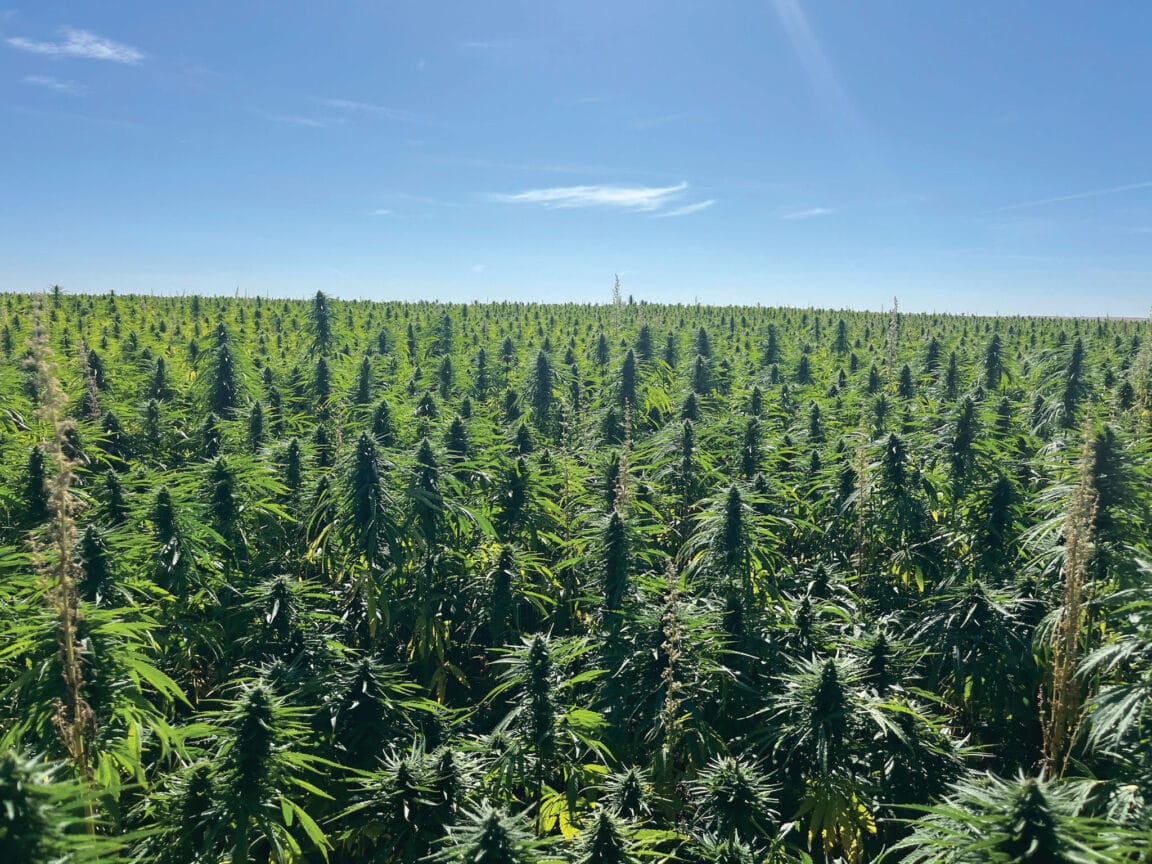
Photos Provided by New West Genetics
Hemp’s Hybrid Moment
A new crop does not earn a place in a farmer’s rotation because it has a compelling story. It earns one because the agronomics work, the numbers pencil out, and somebody is prepared to buy what comes out of the combine.
For Wendy Mosher, that is the line separating industrial hemp’s first wave from what she believes can come next.
“The genetics are ready,” said Mosher, CEO of New West Genetics. “If you grow canola or soy, you can grow our hybrids.”
Then she added the condition that may matter even more to growers considering an unfamiliar crop. “We won’t sell you more seed than we can facilitate an offtake.”
If grain hemp is going to move beyond specialty acreage, it must begin to function more like a familiar oilseed with regionally adapted genetics, competitive yield, conventional equipment, dependable agronomic support, and a defined market before planting.
Breeding a Crop
Based in Fort Collins, Colorado, New West Genetics was established in 2014. The company combines traditional plant breeding with genomic tools to develop non-GMO industrial hemp varieties for food, animal feed, fuel, and fiber markets. Mosher has helped build the business from its inception, directing company strategy, capital formation, and commercial partnerships.
New West’s scientific team brings experience from crops that Upper Midwest growers already know. Chief Technology Officer and co-founder Rich Fletcher spent more than 18 years in Cargill’s hybrid canola program, eventually leading its North American breeding and genetics work. Chief Scientific Officer John McKay is a Colorado State University professor whose research centers on crop adaptation, drought, and sustainability.
The company’s goal is not simply to produce a compliant hemp plant. It is to breed a crop with the maturity, architecture, yield and uniformity required for broad-acre agriculture.
Mosher is especially careful when describing the company’s central breeding advance. She will say New West has “transformed” the crop from open-pollinated populations to hybrids, but immediately clarifies that she is not talking about genetic transformation or genetic engineering.
“It’s all traditional breeding that’s informed by the genomics,” she said.
Why the Hybrid Matters
The biology behind New West’s AMPLIFY trait is relatively straightforward.
Conventional hemp populations tend to produce approximately equal numbers of male and female plants. The females produce the grain, while the males provide pollen but do not contribute grain themselves. AMPLIFY is a genetic trait that is designed to shift that balance sharply toward grain-bearing female plants while adding the vigor and uniformity associated with hybrid breeding.
New West describes its certified hybrid populations as approximately 90% female and 10% male. The company says the combination of more female plants and hybrid vigor improves yield, stand uniformity, harvestability and resilience. Its first AMPLIFY hybrids entered wider commercial release in 2025, with wider availability of AMPLIFY 23 in 2026.
Mosher said the company has seen roughly a 50% yield increase as hemp moved into its hybrid era. New West’s public materials say some hybrid combinations can produce twice the grain of conventional populations.
More useful to growers in the Northern Plains is the emerging evidence from their own region.
In 2025, New West partnered with Grand Farm to compare its AMPLIFY hybrids with open-pollinated hemp varieties at the Grand Farm Innovation Campus near Wheatland, ND. Grand Farm reported that the hybrids produced at least 170% of the open-pollinated entries’ yield, equivalent to at least 70% more grain.
One location and one growing season cannot establish a regional yield guarantee. The result is nevertheless an encouraging local signal, particularly because it came under Red River Valley growing conditions rather than at New West’s home base in Colorado. Grand Farm and New West continued their work in 2026, with stand counts underway in July as part of another cereal-hemp trial.
Five Questions Before Planting Grain Hemp
- Is there a written offtake agreement? Know the buyer, contracted quantity, price structure, and remedies if either party cannot perform.
- Where is the delivery point? Calculate freight, storage, drying, cleaning, and quality discounts before evaluating the projected return.
- Is the variety adapted to the farm’s latitude? Ask for replicated maturity, height, yield, and THC-compliance data from comparable environments.
- What are the regulatory deadlines? Confirm licensing, field registration, sampling, testing, and reporting requirements before seed is purchased.
- What support is available at harvest? NWG provides agronomic support throughout the growing season. Their two trained agronomists have more than 10 years of hemp-growing experience and support customers across the Midwest and Northern Tier.
Built for Northern Latitudes
New West’s interest in North Dakota and Minnesota is deliberate.
Mosher refers to the region as part of an “oil-processing belt,” an area with oilseed knowledge, crushing capacity, and growers accustomed to crops such as canola and soybeans. But genetics developed farther south cannot simply be moved north and expected to perform.
For roughly five years, she said, the company has been selecting material for northern latitudes. The resulting plants are shorter and flower earlier than the company’s southern-adapted genetics, helping them fit a shorter growing season and reducing the risk of carrying an excessively tall crop into harvest.
“We knew we wanted genetics adapted for that region,” Mosher said.
The regional fit is not determined by climate alone. Mosher said New West’s agronomists evaluate the farm, projected season length, and production system, but the deciding factor may be the distance between the field and the buyer.
A crop can grow successfully and still fail economically if freight consumes the margin.
That is why New West’s approach begins with the offtake. The company either connects growers directly with a buyer or helps structure the market relationship before seed is sold. Mosher said its seed has been planted on more than 10,000 cumulative acres during the past six years, although the company keeps its current annual acreage private.
A Market Before the Seed
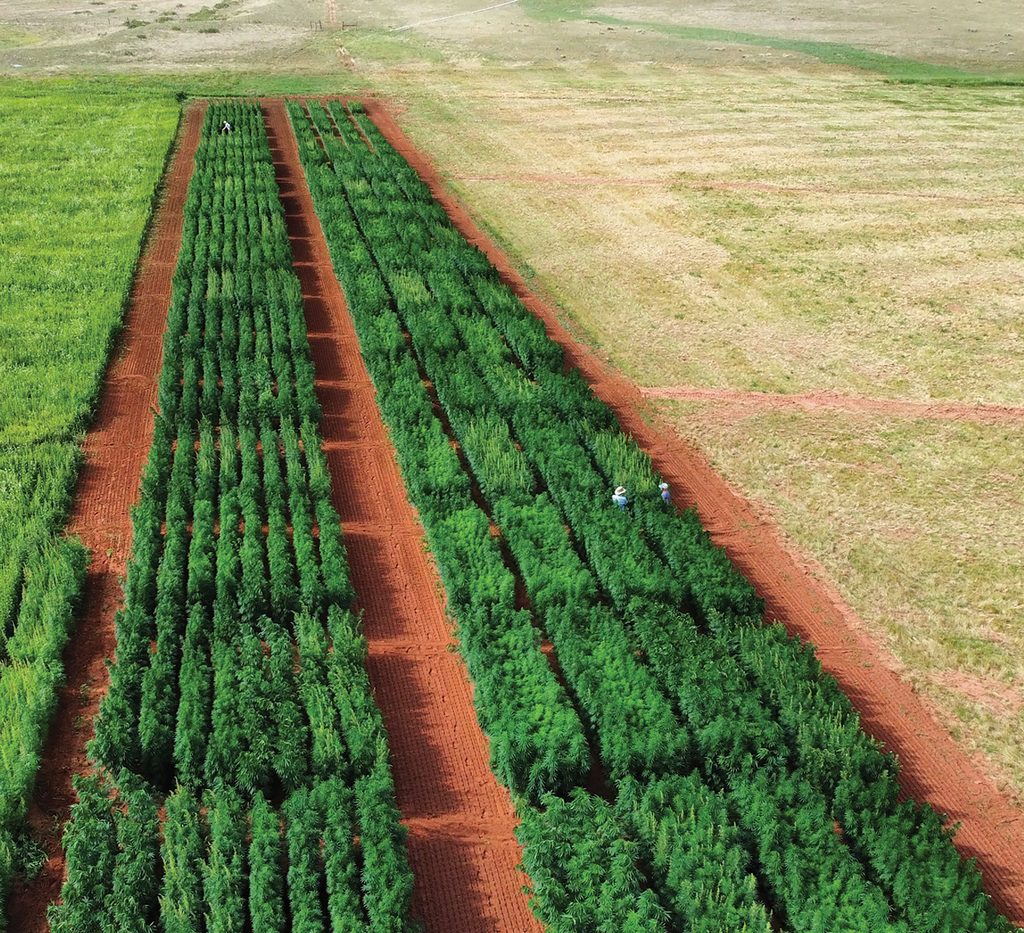
Mosher’s message to growers is that grain hemp can be planted and harvested with equipment already used for conventional oilseeds.
“You can use all of your existing equipment,” she said. “If you grow canola or soy, you can grow our varieties.”
Familiar equipment does not mean there is no learning curve. Crop timing, combine settings, grain handling, storage specifications, and delivery logistics still require planning.
Growers also remain subject to hemp-specific production rules. In North Dakota, a license is required before a producer obtains seed or other propagative material. The state advises growers to use reputable seed sources and varieties known to remain within the acceptable total-THC level. Federal laboratory guidance currently places that level at 0.3%.
Those requirements are one reason Mosher wants grain and fiber hemp regulated separately from intoxicating cannabinoid products. Although both come from Cannabis sativa, their production systems, customers, and commercial purposes are fundamentally different.
A field of industrial hemp is intended to produce grain and agricultural raw materials, not a psychoactive consumer product.
One Seed, Several Markets
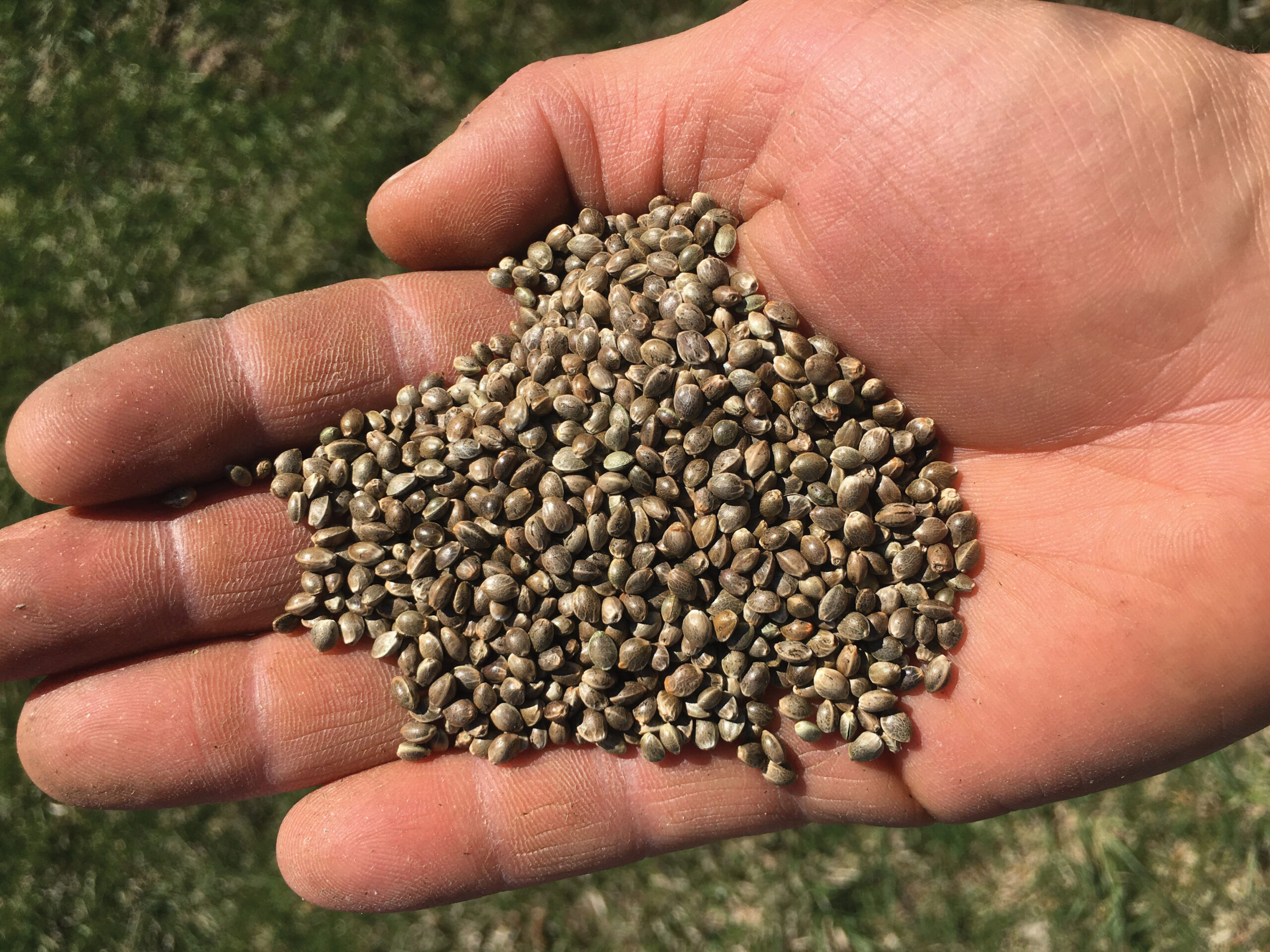
When hemp grain is crushed, it creates two main products: oil and meal. The oil can enter food or industrial markets. The remaining meal can be sold directly into approved uses or refined further into protein ingredients.
Food has provided the crop’s clearest commercial foothold. The FDA has completed its evaluation of GRAS notices for hulled hemp seed, hemp seed protein powder, and hemp seed oil and raised no questions about their use under the specified conditions. Those ingredients are already found in products ranging from protein drinks and nutrition bars to baked goods, sauces, and plant-based foods.
Animal feed is opening more gradually. Hemp seed meal has been added to the Association of American Feed Control Officials’ official publication for use in laying-hen diets, but it is not yet broadly approved for every ingredient form and livestock species. That makes feed a developing outlet rather than an unrestricted commodity market.
Fuel is the potential scale market.
Mosher said New West is working with major fuel companies interested in oilseed feedstocks. According to her, three years of company data indicate that the newest hybrids can produce more oil per acre than soybeans in some rotations.
An Opportunity to Set the Table
Mosher believes renewable fuel could eventually provide the demand needed to move hemp from thousands of acres to a genuinely scaled crop.
What excites her is not only the size of that potential market. It is the possibility that growers who enter early, under disciplined contracts rather than speculative planting, could help determine how the supply chain is built.
“Farms are price takers,” she said. “If you get in early and help set the table, you’re going to have the opportunity to have more control.”
The pieces are beginning to look more familiar with higher-yielding hybrids, northern adaptation, existing farm equipment, multiple products from one seed, and a business model that starts with the buyer rather than ending with a search for one.
“AMPLIFY hybrids are ready,” she said.
NEW WEST GENETICS
newwestgenetics.com | Facebook | Instagram | LinkedIn