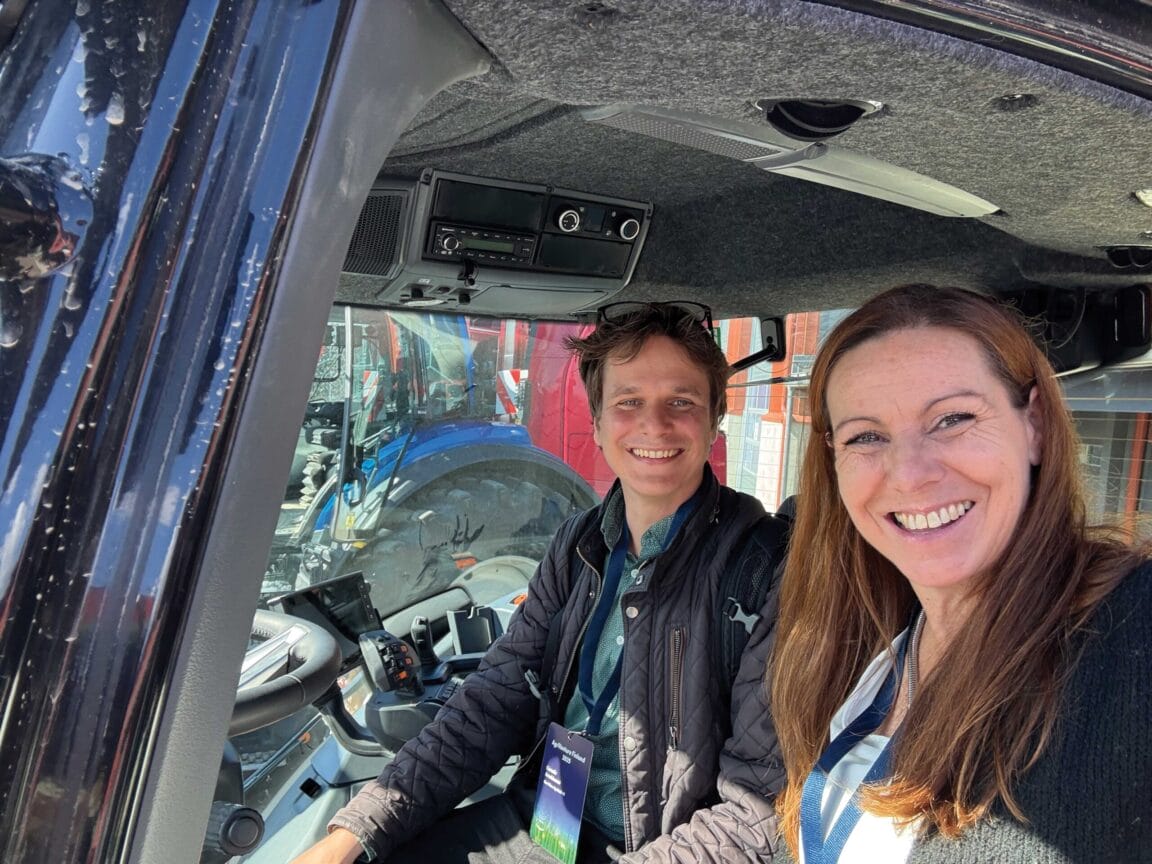
Photos Provided by Winterleap
A New Season for Weed Control
When Heidi Frost Eriksen arrived in Fargo for the first time, the Norwegian agtech founder found familiarity.
She found Norwegian names, Norwegian ancestry, and a town that understands long winters, frozen ground, and short, high-pressure growing seasons.
For many companies, that would be an obstacle. For Winterleap, it is the opportunity.
The Norway-based company is developing a new kind of crop-protection technology designed to help farmers tackle weeds, perennial roots, weed seed banks, and soil-borne pests during the winter, before the growing season begins. Instead of waiting for weeds and pests to emerge and then fighting them with herbicides, mechanical cultivation, hand labor, or other in-season tools, Winterleap’s goal is to reduce the pressure before the crop ever goes in the ground.
“We are opening winter as a new potential treatment window,” Eriksen said.
The technology uses microwaves on frozen soil.
In unfrozen soil, moisture keeps microwave energy near the surface. But when water freezes into ice, the physics changes. According to Eriksen, that allows the microwaves to travel deeper into the soil, where they can be directed toward specific targets such as weed seed banks, deep-rooted perennials, and certain pests.
In other words, the cold is not a limitation. It is what makes the system possible.
Three Winters of Testing
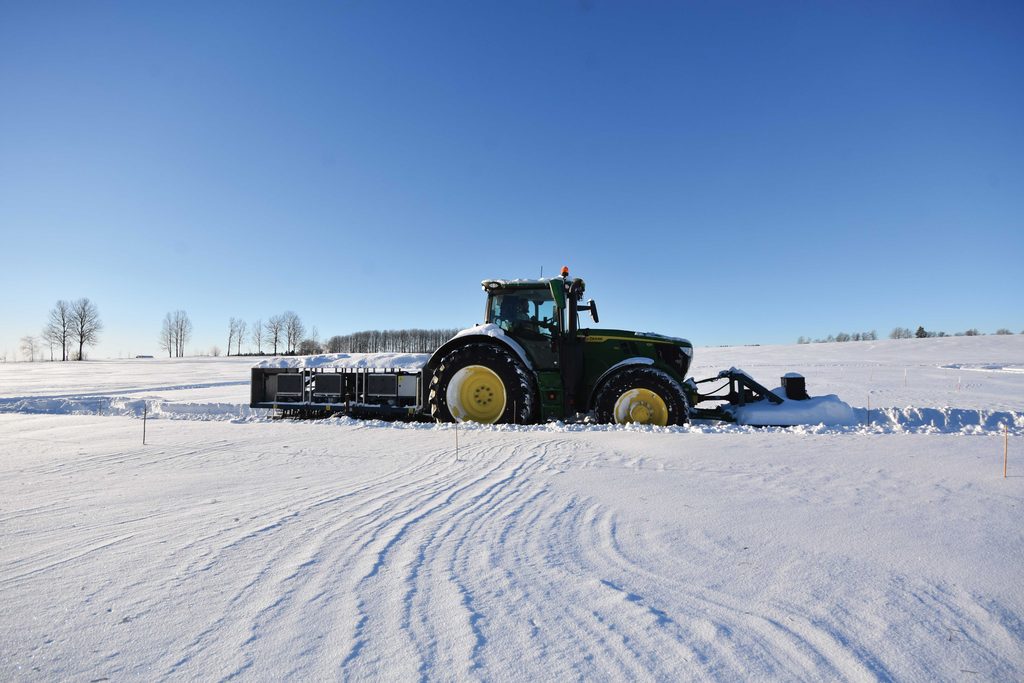
Winterleap is still early in its journey, but the idea has been in development since 2020. The company has now completed three winters of prototyping and testing with Norwegian growers, and the early results have given the team reason to push forward. In one trial with a corn farmer dealing with heavy pressure from lady’s thumb, Winterleap reduced the weed’s seed bank by more than 80%. In another trial with a carrot farmer facing nematode pressure, the company saw reductions of more than 70% one winter and more than 80% the following winter.
For Eriksen, the numbers are encouraging, but the bigger picture is what matters most. Winterleap is not trying to be a miracle tool that replaces everything a farmer already does. Instead, it is designed to make the rest of those tools work better.
“If you can reduce the weed seed bank just a bit, every other summer operation will be faster, better, cheaper,” she said.
That could mean fewer passes through the field, less herbicide pressure, less mechanical cultivation, lower hand-weeding costs, faster harvest conditions, or better performance from other emerging technologies such as laser weeders. For farmers battling herbicide-resistant weeds or pests with limited control options, Winterleap could eventually offer another path entirely.
How the System Works
The system is controlled through software, which helps steer the microwave treatment. Variables such as frequency, tractor speed, treatment time, and pulsing can be adjusted depending on the target species and the depth of the problem. In the early stages, Winterleap has focused heavily on learning species by species. Over time, the company expects to build a growing library of treatment packages that can be applied in different regions, soil conditions, and crop systems.
That is one reason the company is interested in North America, especially northern regions such as the Upper Midwest, Canada, and New York. Winterleap already sees the United States and Canada as core commercial markets, and Eriksen’s visit to Fargo was part of the company’s effort to build relationships with growers, researchers, investors, and ag leaders in regions where frozen-soil treatment makes sense.
This coming winter, Winterleap plans to bring a treatment module, not a full machine, but a smaller box-like component, to begin small-scale testing in the Fargo area. The goal is to test species the company does not have access to in Norway, including soybean cyst nematode and herbicide-resistant weeds that are more common in this region. The team is also setting up pilots in places where growers already have problems with species Winterleap has shown progress against, including trials in Montreal and upper New York State.
For farmers, any new technology raises an important question: What else does it affect?
Protecting Soil Life
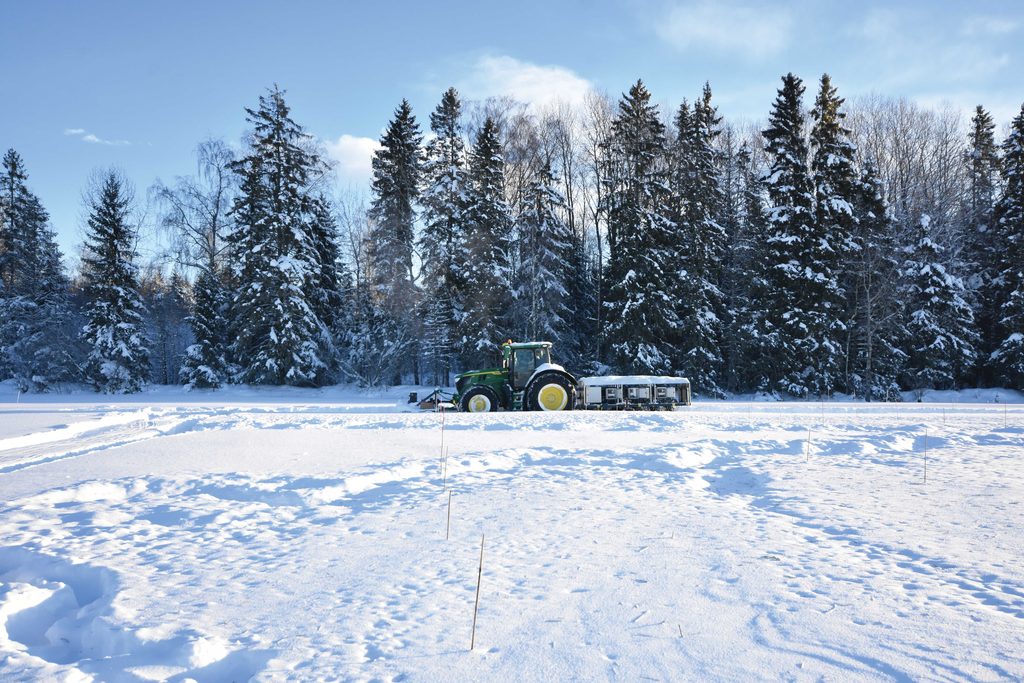
Eriksen understands that concern. She said Winterleap has tested from the beginning to see how its treatment affects beneficial soil life. The company uses soil sampling, control plots, microscope checks, and continued observation to compare treated and untreated areas.
That focus comes from the origin of the technology. Winterleap’s inventor and Eriksen’s co-founder had previously worked around soil steaming, a method that uses heat to sterilize soil. While steaming can kill weeds and pests, it also kills beneficial life. Winterleap was developed with a goal to target the problem without sterilizing the soil column.
“When we come in, the soil is frozen. When we leave, the soil is frozen,” Eriksen said.
Heat is still part of the process at the target level, but the company is not trying to warm the entire soil profile. That distinction is central to Winterleap’s pitch.
The company wants to reduce harmful pressure while preserving soil structure and beneficial biology.
It also wants the economics to work.
Bringing Hardware to Market
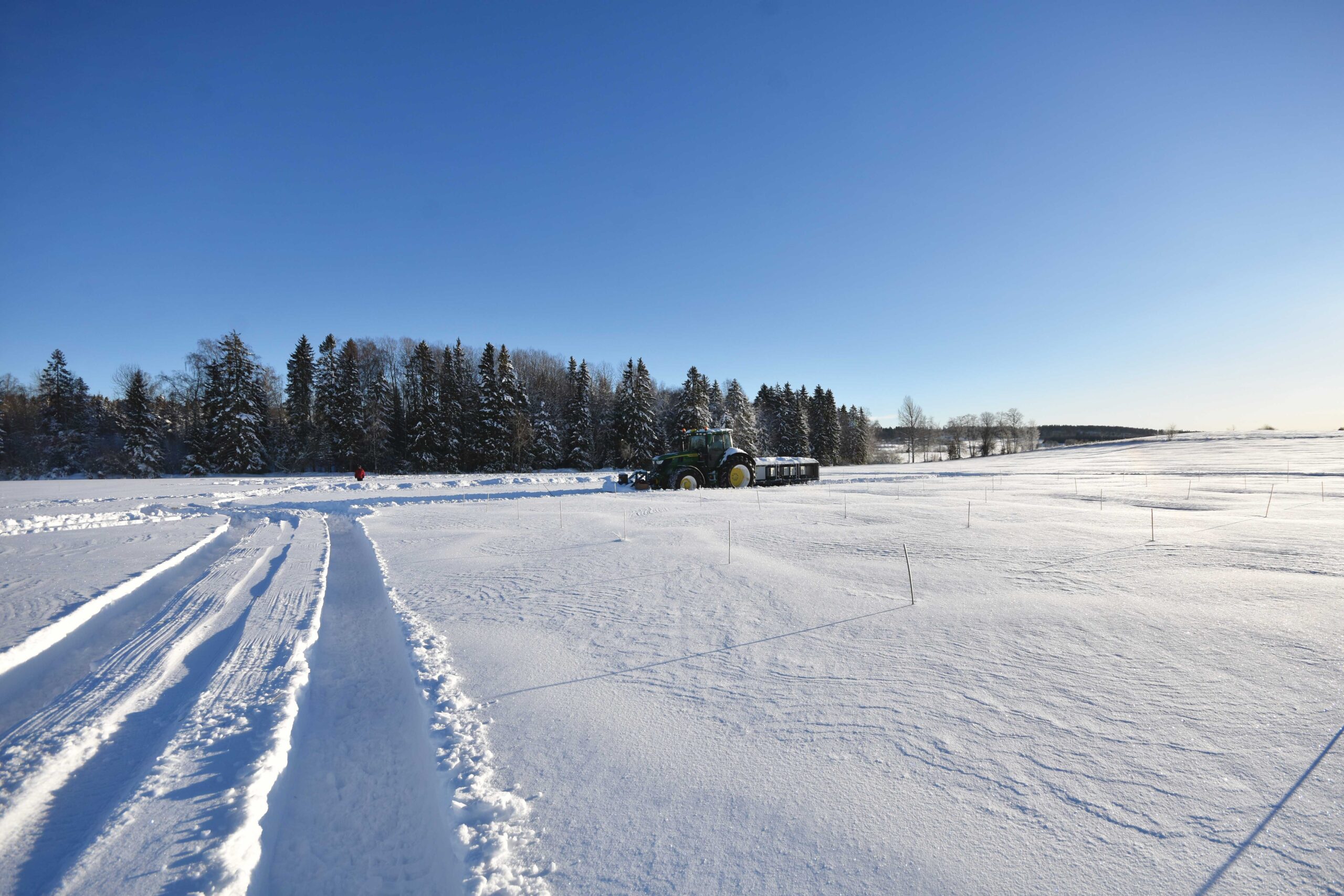
Eriksen is candid about the challenge of bringing hardware to market. The first commercial-ready winter machines are expected in December 2027, but Winterleap is trying to scale carefully. The company has seen strong interest, but hardware is expensive, and early overbuilding can drain a startup before it has time to refine the product.
The plan is to begin with an equipment-as-a-service model. Rather than asking farmers to buy a machine immediately, Winterleap expects growers to use their own tractor and rent the machine for a certain number of days. That would allow farmers to test the technology on problem areas, high-pressure fields, or specific weeds and pests before making a larger commitment.
“We will not sell the machine the first season,” Eriksen said. “It’s more risk on our side. Try it on smaller parts, or the worst weeds or nematodes.”
Farms in this region are large, and the final machine will need to be cost-optimized, energy efficient, and sized for real commercial use in crops such as soybeans and corn. Winterleap is not just trying to prove that the science works. It has to prove that it can work at the speed, cost, and scale farmers need.
Why Fargo
For now, Eriksen sees Fargo as an important place to start building that future. The region has the winter conditions. It has growers facing difficult weed and pest pressure. It has a strong agricultural community. And, as she quickly discovered, it has a willingness to listen to a Norwegian founder with an unusual idea: maybe the best time to fight next year’s weeds is when this year’s fields are frozen solid.
Winter has always shaped farming in the North.
WINTERLEAP
winterleap.com